
The Nap Is an Intervention, Not a Gap in the Day
Most people file a nap under lost time. It reads as a sign of not coping, a habit for the very young or the very old, or at best a way to claw back some of the sleep that last night took. Judged that way, the nap is something to apologize for, and its value gets measured by how guilty it makes you feel rather than by what it changes inside you.
The question that brings most trained people to the subject is narrower than the one they should be asking. They want to know whether do naps help with muscle recovery in the same direct way that protein or a rest day does. That is a reasonable question, and it has a specific answer later in this article. It is also the wrong first question, because it assumes the nap works on the muscle. The more useful question is what a nap actually changes, and the honest answer is that it works mostly on the brain.
THE WRONG MODEL
A gap in the day
The nap is filed under lost time, a sign of not coping, and judged by how guilty it makes you feel.
THE MECHANISM
An active intervention
A short window that discharges the chemical load built up since waking and acts on the central component of fatigue.
A daytime nap is an active physiological event, not a pause. Across a short window it discharges part of the chemical load that has been building since you woke, and depending on how long it runs it moves through the same sleep stages that night sleep uses. Those are the power nap benefits worth caring about, and they act on the central component of fatigue, the part of tiredness that lives in the nervous system rather than the tissue. That distinction is the whole article, and it is why a nap can sharpen an evening training session or a hard block of work even when nothing about the muscle has changed.
The benefit is real, and it is bounded. Napping helps most when you are short on sleep and less when you are already rested, and a nap taken the wrong way can leave you worse off for half an hour. Understanding why requires looking at what the nervous system is doing while you are awake, and what a nap interrupts.
A daytime nap is an active physiological event, not a pause.
What a Nap Actually Does Inside the Brain and Body
Sleep Pressure: The Chemical Brake That Builds All Day
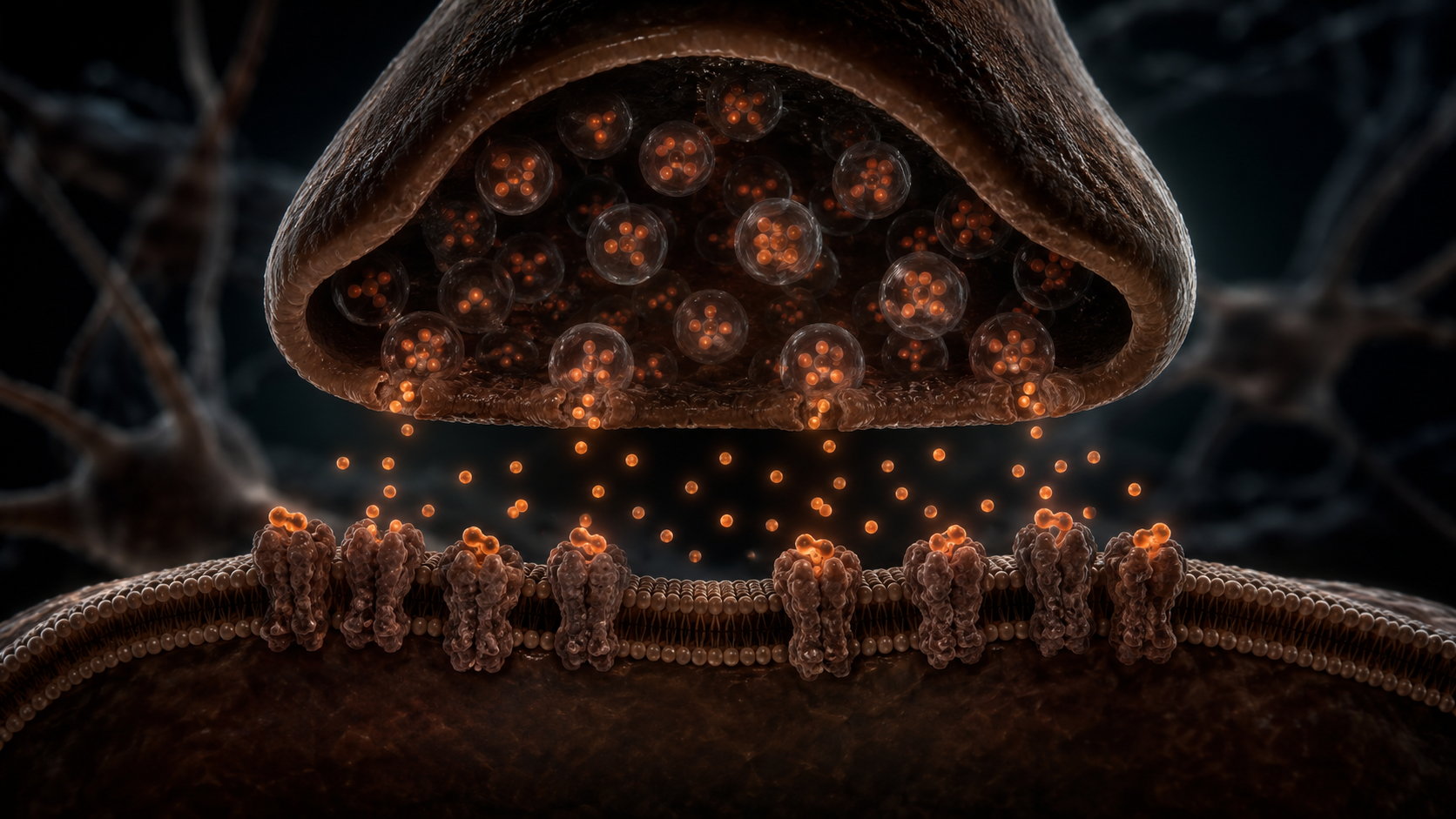
Every hour you are awake, your brain runs on ATP, and using ATP releases adenosine as a byproduct. Adenosine accumulates in the extracellular space, concentrating in regions like the basal forebrain, and binds its receptors. Rising adenosine is one half of what sleep scientists call the two-process model, the homeostatic drive to sleep that grows with time awake (Greene et al., 2019). This is sleep pressure, and it is distinct from your circadian clock. The clock, the second process, decides when you are inclined to sleep across the day. Sleep pressure decides how hard the drive pushes at any given hour.
Sleep pressure is not an abstraction you notice only at bedtime. As adenosine climbs through the afternoon, it raises your sense of effort and dulls vigilance, so the same training set feels heavier and the same spreadsheet takes longer to parse. The receptor pathways divide the work. The A1 receptor both registers accumulated pressure and helps resolve it during sleep, while the A2A receptor helps gate whether sleep can begin at all, which is why the drive lifts once you finally rest (Greene et al., 2019). A nap is the only event during the working day that clears a meaningful share of that adenosine before night sleep does. That single fact is what makes the nap a lever rather than a comfort, and it is also the reason caffeine and napping are connected, since caffeine works on the same receptors.
Sleep pressure builds all day. A nap discharges it.
Adenosine accumulates while you are awake; a daytime nap clears part of it before night.
Illustrative. Curve shape is representative, not plotted from measured values.
What Happens During a Nap: Stages by the Clock
Sleep is staged, and a nap enters those stages in the same fixed order night sleep uses, which means the length of the nap decides what you actually get. This is the part most people miss when they treat all naps as interchangeable, and it is the core of what happens during a nap.
In roughly the first twenty minutes, a nap sits in light non-REM sleep, stages N1 and N2. N2 is where sleep spindles appear, brief bursts of brain activity linked to protecting sleep and to processing what you have recently learned, and this light window is where adenosine clearance restores alertness with little else attached. Slow-wave sleep, stage N3, begins around twenty-five to thirty minutes in. It brings the shift toward parasympathetic tone and the pulse of growth-hormone secretion that the body uses to build the conditions for physical recovery. A full cycle out to REM sleep takes about ninety minutes, and REM is where the brain does much of its motor-skill and memory consolidation.
WHAT EACH STAGE DELIVERS
Light sleep (N1/N2)
The first ~20 minutes; adenosine clearance restores alertness with little else attached.
Slow-wave sleep (N3)
Begins ~25 to 30 minutes in; brings the parasympathetic shift and the growth-hormone pulse behind physical recovery.
REM sleep
Reached around 90 minutes; supports motor-skill and memory consolidation.
Each of these is a separate mechanism, so a longer nap is not more of the same benefit stacked higher. A twenty-minute nap and a ninety-minute nap are doing different jobs, and a nap cut off at forty-five minutes catches you in the deepest part of the first cycle. The first stretch of any sleep bout is weighted toward slow-wave sleep, which is exactly why the medium nap is the one that tends to backfire. That failure has a name.
Sleep Inertia: Why a Long Nap Can Leave You Worse
Sleep inertia is the transient state of grogginess, disorientation, and degraded cognitive and motor performance that you feel immediately on waking. It is a real, measurable impairment, and in some studies the performance drop right after waking was larger than the drop seen after a full night of sleep deprivation (Hilditch & McHill, 2019). Most of the cognitive effect clears within about thirty minutes, though full recovery can take up to an hour in some measures.
The mechanism is that the brain does not switch instantly from deep sleep to full wakefulness. Different regions come back online at different rates, with the prefrontal areas that handle judgment and coordination lagging behind, so for a stretch after waking you are running on a partially reactivated system. The evidence that waking specifically out of slow-wave sleep makes inertia worse is real but mixed across studies, so the safe reading is that longer naps carry more inertia risk rather than that they guarantee it (Hilditch & McHill, 2019). This is why nap duration is a genuine variable and not a matter of taste. The sixty-minute nap is the trap, because it is long enough to reach deep sleep and short enough to wake you out of it before the cycle completes.
The sixty-minute nap is the trap, because it is long enough to reach deep sleep and short enough to wake you out of it before the cycle completes.
Do Naps Help With Muscle Recovery? Central vs Peripheral Fatigue
Fatigue is not one thing, and the split matters here more than anywhere else in the article. Central fatigue is a reduction in the drive the central nervous system sends to muscle and to attention, so output falls even though the muscle itself is still capable of more. Peripheral fatigue is a change at the muscle, in the contractile machinery and its local chemical environment. A nap acts on the first and barely touches the second.
So the direct answer to whether do naps help with muscle recovery is that a nap does not repair muscle tissue the way protein synthesis and time do. What it does is restore central drive and lower perceived effort, the sense of how hard a given output feels, which is often the real ceiling on a session rather than the muscle's raw capacity. It also improves the recovery environment through the slow-wave-linked growth-hormone release and the shift toward parasympathetic tone described above, and it lowers the sympathetic load that a hard day keeps elevated. Those are supporting conditions, not the repair itself.
A reader who naps expecting his muscle fibers to knit faster has asked a peripheral question about a central tool. The nap is worth taking, but for what it actually does, which is clearing the brake on the nervous system that was capping his output in the first place. That reframing is where the practical value lives, because central fatigue is what shows up on the mat and at the desk long before the muscle gives out.
A nap acts on the first and barely touches the second.
Where a nap acts
A nap works on central fatigue and barely touches the muscle itself.
Central fatigue
nap acts here
Peripheral fatigue
barely affected
Illustrative. Relative effect drawn from the text, not plotted from measured values.
What This Means for Training and Cognitive Work

Napping and Athletic Performance
The measurable effects of napping and athletic performance are clearest where central drive matters, in sprint speed, repeated-sprint ability, and reaction time. A systematic review of napping in athletes found benefits across physical, cognitive, and mood outcomes, with the effects on sprint and reaction time positive in most studies though not in every one (Lastella et al., 2021). The mechanism is consistent with everything above. Restored central drive raises voluntary muscle recruitment and speeds the nervous system's response, and none of it requires new muscle tissue.
WELL-RESTED
Small effect
When you are already rested, the nap's benefit to sprint speed and reaction time shrinks.
SLEEP-RESTRICTED
Large effect
After a short night, the nap recovers the central drive that sleep debt subtracted, and the benefit is substantially larger.
The size of the effect depends on how rested you already are. The same review found the benefits were substantially larger in sleep-restricted athletes than in well-rested ones, which is the honest boundary on the claim (Lastella et al., 2021). The review also noted that a daytime nap adds to total sleep across twenty-four hours without necessarily harming that night's sleep, which matters for anyone carrying a chronic deficit. For the person training in the evening after a short night and a full day, this is the relevant case. The nap is not adding a new capacity, it is recovering the drive that sleep debt had quietly subtracted.
Napping and Cognitive Work
The same central mechanism explains the effect of napping and productivity on demanding mental work. A meta-analysis of short daytime naps found improvements in overall cognitive performance and a stronger effect on alertness specifically, with the benefit persisting for up to two hours after the nap (Navel et al., 2021). Clearing adenosine restores prefrontal function and sustained attention, which are the first resources sleep pressure erodes and the ones that hard focused work spends fastest.
The type of gain tracks the nap length, in line with the stage architecture. A short nap restores vigilance and working memory, the capacity you draw on during a block of concentrated work. A longer nap that reaches REM does more for consolidating something you are learning, a technique on the mat or a body of material at the desk. The practical read for someone with a demanding job is that the nap restores a resource more effectively than it rescues one already spent, so placing it before a high-stakes cognitive block returns more than reaching for it after attention has collapsed. That timing logic is where most napping goes wrong.
How long the boost lasts
2 hours
Alertness benefit persists up to two hours after a short nap (Navel et al., 2021).
The nap is not adding a new capacity, it is recovering the drive that sleep debt had quietly subtracted.

Where Napping Goes Wrong
Most of the reasons people conclude that naps do not work for them are timing and duration errors, not evidence that the nap is useless. Each one follows from a mechanism already described, which is why none of them needs a new concept to fix.
The first is the medium-length nap taken right before you need to perform. A nap of forty-five to sixty minutes is long enough to reach slow-wave sleep and likely to wake you out of it, so you surface into sleep inertia at the exact moment you needed to be sharp. The fix is not to nap less often but to match the length to the window, which the next section covers.
4.1
The medium nap before performing
Forty-five to sixty minutes reaches slow-wave sleep and wakes you into inertia at the moment you need to be sharp.
4.2
Napping too late
A late-afternoon nap discharges the sleep pressure you needed to fall asleep that night.
4.3
The category error
Expecting a nap to repair muscle or replace a lost night; it does neither.
4.4
Misreading grogginess
Treating post-nap grogginess as proof naps fail, when it is a signal about duration.
The second is napping too late in the day. Because a nap discharges adenosine, a late-afternoon nap can lower the sleep pressure you were relying on to fall asleep that night, which is worth noting as a constraint even though nighttime sleep is not this article's subject. The third is the category error already addressed, expecting a nap to repair muscle or to replace a lost night of sleep. It does neither, and the countermeasure research is explicit that these tools are temporary and cannot substitute for a proper night of sleep (Filtness et al., 2026). The fourth is reading the grogginess of a mistimed long nap as proof that napping fails, when it is a signal about duration rather than a verdict on the tool. Whether napping is good for you depends almost entirely on getting these variables right, and all of them are controllable.
Whether napping is good for you depends almost entirely on getting these variables right, and all of them are controllable.
Choosing Nap Length and Timing by Mechanism
How Long Should a Power Nap Be?
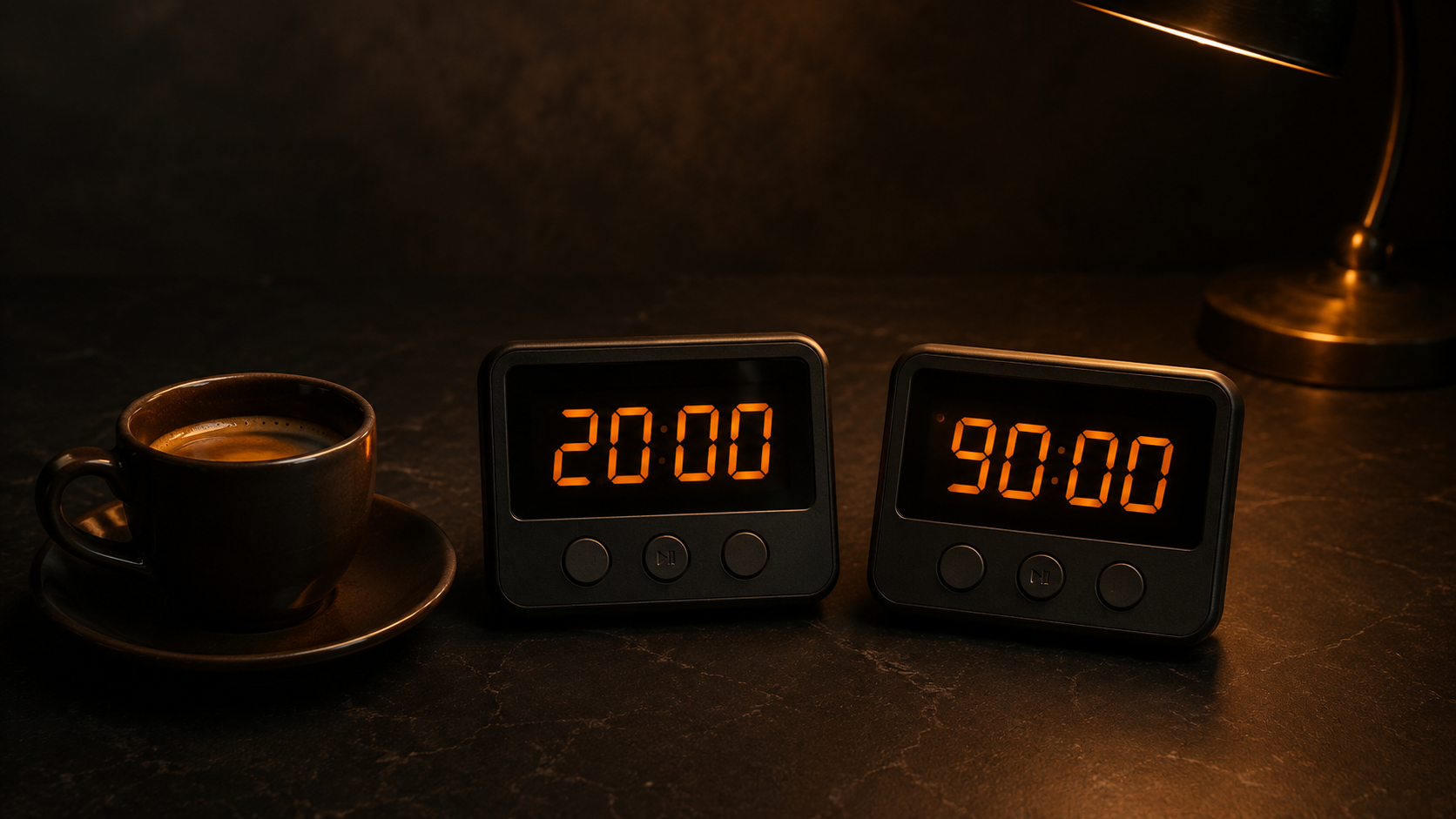
The answer to how long should a power nap be falls out of the stage architecture rather than from a rule someone hands you. A nap of ten to twenty minutes stays in light sleep, buys back alertness through adenosine clearance, and carries almost no inertia risk, which makes it the right tool when you need to be sharp within the hour. A nap of sixty to ninety minutes reaches slow-wave sleep and completes toward REM, so it does more for recovery signaling and consolidation, but it needs a window where a stretch of post-nap grogginess will not cost you anything.
The nap timeline: stages by the clock.
How long you nap decides which stage you get, and where the inertia risk sits.
Illustrative. A representative nap hypnogram; exact stage timing varies by person and night.
SHORT NAP
10 to 20 minutes
Stays in light sleep, buys back alertness through adenosine clearance, almost no inertia risk; right when you need to be sharp within the hour.
LONG NAP
60 to 90 minutes
Reaches slow-wave sleep and completes toward REM for recovery and consolidation, but needs a window where post-nap grogginess costs nothing.
The choice is a function of what you need next, not a fixed number that applies to everyone. Worth noting, the cognitive meta-analysis found that nap duration did not clearly change the size of the cognitive benefit, which suggests that for pure alertness the short nap gives up very little to the long one (Navel et al., 2021). Given how the stages work, the reasonable default is the short nap for sharpness and the long nap only when the schedule genuinely allows the inertia to pass before it matters.
The Coffee Nap
The coffee nap uses the same adenosine mechanism from a second angle. Caffeine takes roughly twenty to thirty minutes to reach peak concentration in the brain, where it competes with adenosine at its receptors and blocks the sleep-pressure signal. If you drink coffee and then take a short nap, the nap clears adenosine off the receptors while the caffeine arrives to occupy the sites that just opened, so the two effects line up in the same direction instead of working against each other.
The honest version of this is that the coffee nap is a temporary countermeasure with a bounded ceiling. In one study of treated sleep-apnea drivers, the caffeine nap added little over caffeine alone, and every countermeasure tested wore off and could not replace a night of sleep (Filtness et al., 2026). It is a reasonable move before an evening session or a hard block when you have twenty minutes to spend, and it is not a way to run indefinitely on borrowed alertness. Used within its limits, it is one more application of the same brake-clearing mechanism the whole article turns on.
It is a reasonable move before an evening session or a hard block when you have twenty minutes to spend, and it is not a way to run indefinitely on borrowed alertness.
Frequently Asked Questions
How long should a power nap be?
A ten to twenty minute nap stays in light sleep, clears adenosine, and restores alertness with almost no grogginess, which suits needing to be sharp within the hour. A sixty to ninety minute nap reaches slow-wave and REM sleep for recovery and consolidation, but it fits only when a window allows the post-nap inertia to pass.
Why do I feel worse after a nap?
That grogginess is sleep inertia, a transient drop in alertness and coordination on waking. It tends to be worst when a longer nap pulls you into slow-wave sleep and then wakes you mid-cycle, because different brain regions reactivate at different rates. It usually clears within about thirty minutes, and shorter naps largely avoid it.
Do naps help with muscle recovery?
Not directly. A nap does not repair muscle tissue the way protein and time do. It acts on central fatigue, restoring nervous-system drive and lowering perceived effort, and it supports recovery indirectly through slow-wave-linked growth hormone and a shift toward parasympathetic tone. The gain a nap delivers is central, not structural muscle repair.
How does a coffee nap work?
Caffeine takes about twenty to thirty minutes to reach the brain, where it blocks adenosine receptors. Napping in that window clears adenosine off those receptors just as the caffeine arrives to occupy them, so both effects push in the same direction. The result sharpens alertness briefly, but it is temporary and cannot replace lost sleep.
Does napping improve athletic performance?
Yes, mainly through restored central drive. Reviews find naps improve sprint speed and reaction time, with the largest gains in sleep-restricted athletes and smaller effects when you are already rested. The nap recovers the output that sleep debt had subtracted rather than adding new physical capacity, so the benefit scales with how tired you were.
The Bottom Line
The question that opens this subject, whether do naps help with muscle recovery, has the wrong subject built into it. A nap is a central-fatigue tool, and central fatigue is the limiter that accumulates fastest in a life that combines hard training, a full workload, and short nights. The muscle was never the bottleneck the nap was going to fix, which is why judging the nap by muscle soreness misses what it did.
The value of a nap is not that it adds something to your recovery ledger. It is that it removes a brake you did not know was set, the accumulated sleep pressure that had been raising your perceived effort and lowering your output all afternoon. Seen that way, the nap stops being time you lose and becomes the shortest available route back to the capacity you already had.
Seen that way, the nap stops being time you lose and becomes the shortest available route back to the capacity you already had.
A nap is a central-fatigue tool. It clears the brake on the nervous system, it does not repair the muscle.
The tired feeling that caps an afternoon session is mostly accumulated sleep pressure, and a short nap discharges enough of it to hand the drive back.
Mydos Performance
— Fatigue, Recovery and Durability Series —
Napping for Performance: Do Naps Help With Muscle Recovery?
Clearing the chemical brake on effort
· By Ricardo Londono, MD/PhD ·