

Caffeine Crash Explained: Why Energy Drinks Work (and Fail)
Home / ▶ Listen to this article 0:00 0:00 1 — Sustained vs Borrowed Energy Are Energy Drinks Bad for […]

Home / ▶ Listen to this article 0:00 0:00 1 — Sustained vs Borrowed Energy Are Energy Drinks Bad for […]
Home / ▶ Listen to this article 0:00 0:00 01 — THE DEPLETION MYTH The Problem With Treating Glycogen Like

How long does muscle recovery take depends on which biological process is completing. Understand fatigue accumulation, recovery cascade, and durability.

The 3 energy systems in the body each produce ATP at a different rate. Which system is rate-limiting changes with effort and determines when performance fails.

Peripheral muscle fatigue is not always the limiting factor. This article examines how cellular ATP production limits performance before muscles fail, and what it means in practice.
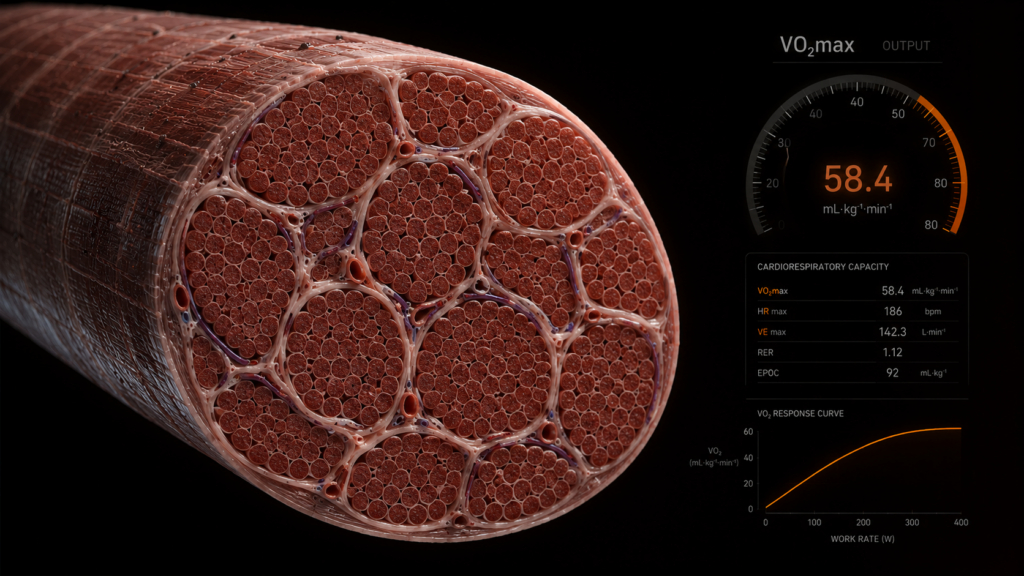
Learn how to increase mitochondrial density for greater endurance capacity: the biogenesis mechanism, Zone 2 training, and lactate threshold adaptation.

Energy in fat vs carbohydrate is rate-limited by enzyme kinetics. Both fuels run simultaneously, but fat cannot sustain ATP demand above moderate intensity.

Home / 1 — The wrong diagnosis has a cost You’re Solving the Wrong Variable Understanding what is metabolic flexibility

The three energy systems explained: all three run at once, not in sequence. Intensity and duration determine which one contributes most at any given moment.

Science explains why do some days feel effortless and others don’t. Six measurable biological systems determine daily readiness, from HRV to sleep chemistry