
The Work Doesn’t Make You Better. Sleep Does.
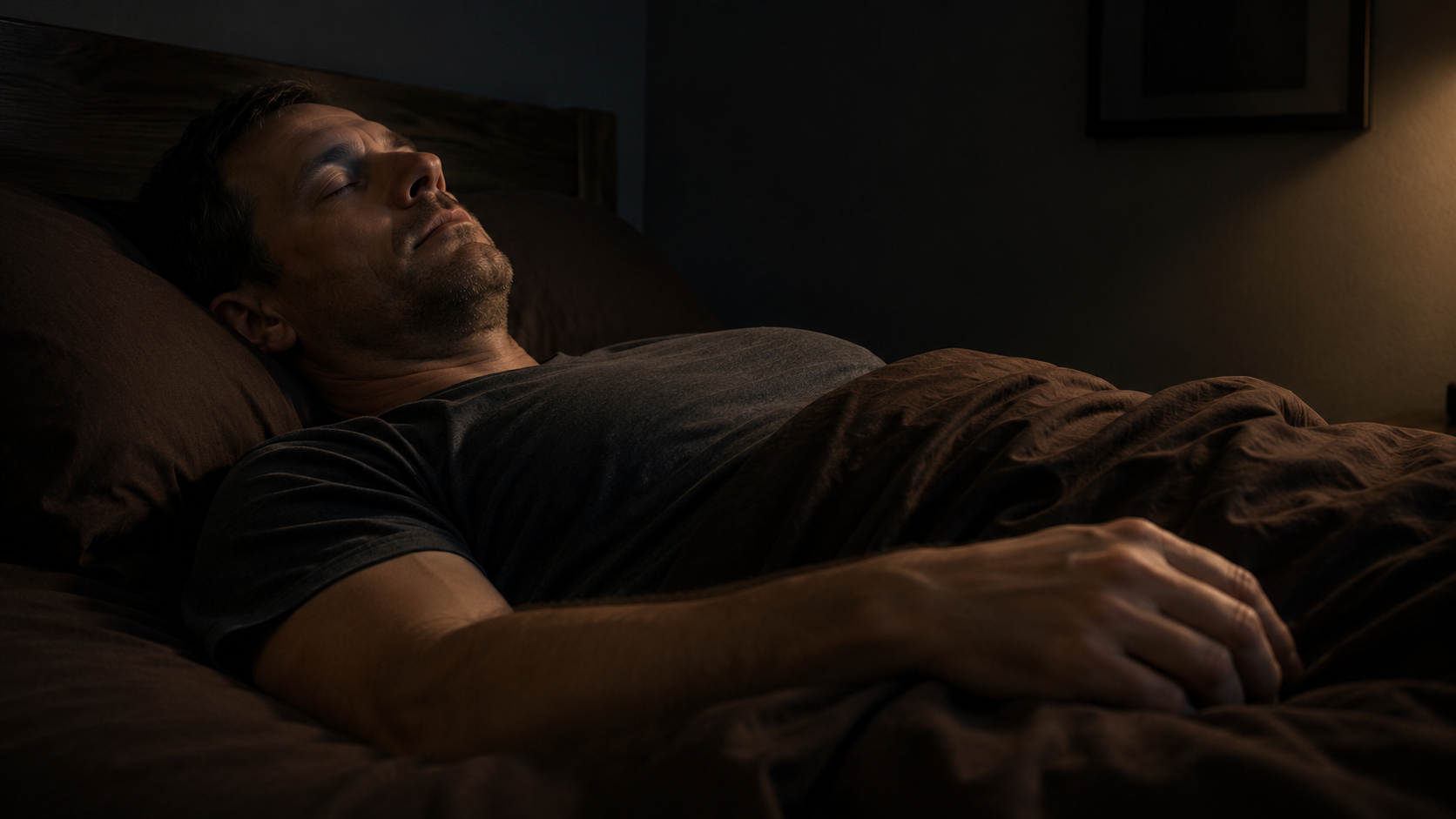
Athletes who sleep six hours per night produce measurably worse output than those who sleep eight. This gap in sleep athletic performance is not explained by aerobic fitness or training consistency. It is explained by whether the previous session’s biological stimulus completed its conversion into adaptation, and that conversion depends almost entirely on what happens during sleep.
The prevailing model treats sleep as the gap between training sessions: necessary for rest, but passive in nature. The physiology describes something different. Sleep is not the downtime between productive hours; it is the phase during which the cellular, hormonal, and neural machinery of adaptation operates. The session applies the stress. The biochemical response to that stress unfolds during sleep. Without it, the stimulus is applied but the outcome is not fully delivered.
The connection between sleep and athletic performance becomes measurable when the variable is isolated. Mah et al. (2011) examined collegiate basketball players who extended their nightly sleep opportunity to ten hours for several weeks. Without changing any element of training, players showed significant improvements in sprint times, shooting accuracy, and reaction time (Mah et al. 2011). The mechanism responsible for those gains was not improved conditioning; it was the recovery and adaptation that prior training had not fully processed under shorter sleep durations.
“Sleep is not the downtime between productive hours; it is the phase during which the cellular, hormonal, and neural machinery of adaptation operates.”
Understanding sleep at this level requires moving past general recommendations about duration and into the underlying mechanisms. The specific structure of a night’s sleep determines which biological processes run and which are curtailed. Duration is one variable; architecture is another, and it is the more consequential one.
“Duration is one variable; architecture is another, and it is the more consequential one.”
How Sleep Processes What You Train
What Stage of Sleep Is Most Important for Physical Recovery?
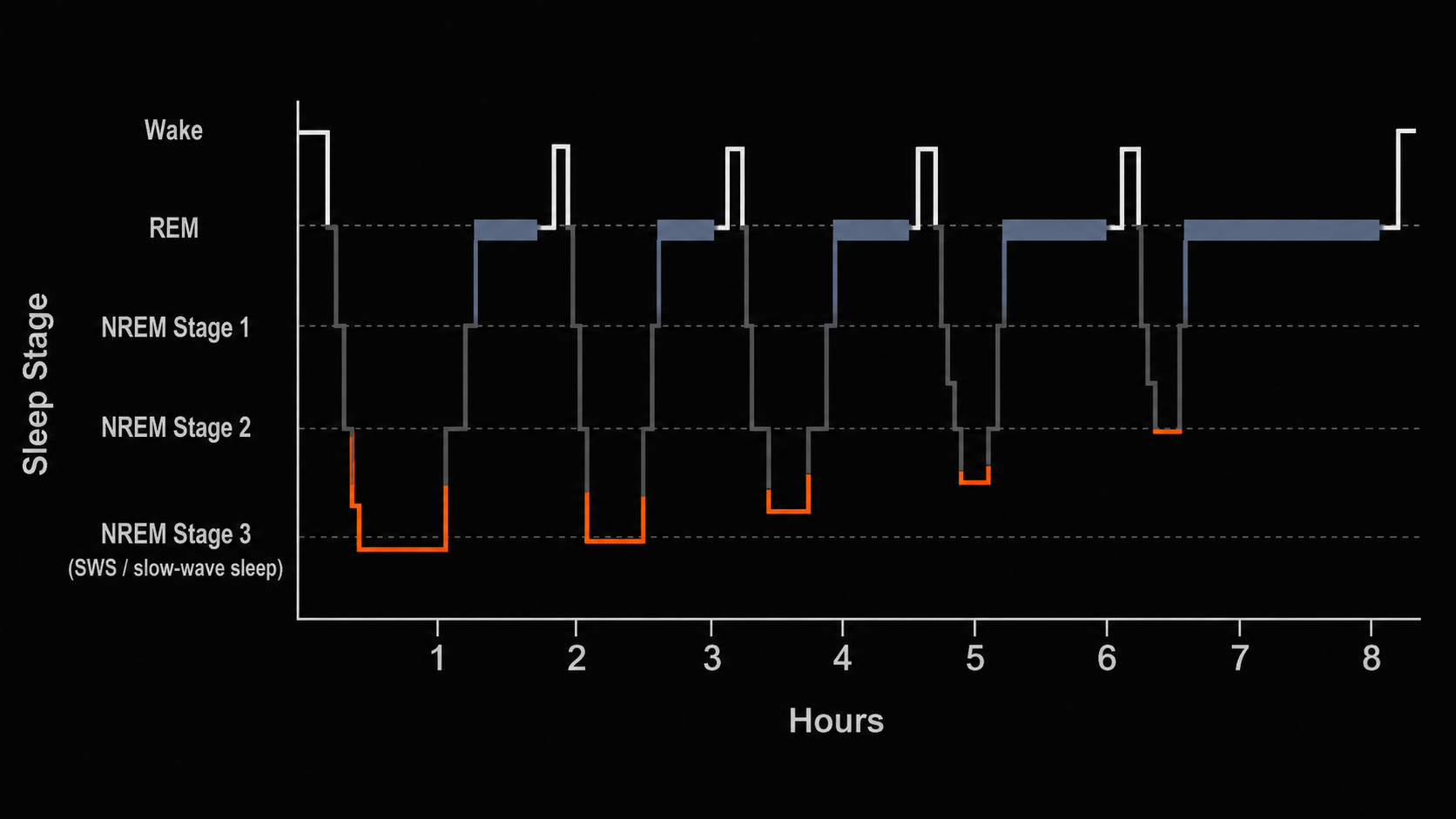
Sleep is not a single state. A full night cycles through distinct phases, each with different physiological properties and different roles in the recovery process. Understanding what stage of sleep is most important for physical recovery requires understanding how those phases are organized and what each one does.
The basic unit of sleep architecture is a 90-minute cycle. Each cycle contains stages of non-rapid eye movement sleep, including three progressively deeper NREM stages, followed by a period of REM sleep. The body moves through four to six of these cycles per night. Within this structure, the distribution of specific stages is not uniform across the night. Slow-wave sleep, the deepest NREM stage and the one characterized by large, slow delta-wave brain activity, is heavily concentrated in the first three to four hours of sleep. REM sleep is concentrated in the last two hours of a full night. A night shortened on the front end loses SWS; a night shortened on the back end loses disproportionately more REM.
One sleep cycle, drawn as a clock — and how its shape changes across the night
Each 90-minute cycle moves clockwise through three progressively deeper non-REM stages — N1 (drifting off), N2 (light sleep), N3 / slow-wave sleep (SWS, the deepest) — before shifting into REM, four to six times a night. SWS, marked by large delta-wave activity, dominates the earliest cycles. By the last cycles of the night, REM takes over instead. Cut the night short on the front end and SWS is what's lost; cut it short on the back end and REM is lost disproportionately.
Cycle 1 of 5 — SWS dominates this cycleThis distribution matters because the two stages perform different functions. SWS is heavily concentrated in the first three to four hours and is the primary window for physical restoration: tissue repair, growth hormone secretion, and immune regulation. REM is the primary window for motor skill consolidation and neural recovery. Neither substitutes for the other. An athlete who sleeps six hours may get adequate amounts of one stage while being substantially short on the other, depending on which hours were cut. The common pattern of late-night sleep combined with early-morning obligations tends to compress both.
Slow-Wave Sleep
SWS / NREM Stage 3
Primary window for physical restoration. The pituitary releases the majority of nightly growth hormone in a single large pulse during SWS. Concentrated in the first 3–4 hours. Drives protein synthesis, tissue repair, and immune regulation.
REM Sleep
Rapid Eye Movement
Primary window for motor skill consolidation and neural recovery. Movement sequences refined in training are consolidated during REM through offline replay. Concentrated in the final 2 hours. Cannot substitute for SWS on physical restoration.
What Sleep Stage Is Best for Recovery and What Actually Happens There?
The clearest answer to what sleep stage is best for recovery is slow-wave sleep. During SWS, the pituitary gland releases the majority of the night’s growth hormone in a single large pulse, typically within the first ninety minutes of sleep onset. This GH pulse is the primary anabolic signal driving protein synthesis, tissue repair, and glycogen restoration in the hours following a training session.
Van Cauter et al. (2000) documented the relationship between SWS and GH secretion across 149 healthy men spanning early adulthood through old age. The amount of GH secreted nightly was independently and strongly associated with SWS duration regardless of age, and GH output declined dramatically as SWS declined across the lifespan (Van Cauter et al. 2000). The mechanism is direct: without the SWS window, the hormonal signal for tissue repair does not fire at full magnitude.
What this means practically is that anything disrupting SWS reduces the intensity of the anabolic signal available to the body overnight. Late bedtimes compress the SWS window because SWS is front-loaded in the night. Alcohol disrupts slow-wave architecture even when it initially induces sleep. Fragmented sleep prevents the sustained delta-wave activity (0.5 to 4 Hz) that characterizes the stage. In each case, the training session happened, but the primary hormonal trigger for the recovery response was blunted or interrupted. SWS is a specific, measurable brain state that is identifiable by EEG and quantifiable in its absence. The performance cost of its disruption is proportional to how much of it was lost.
“During SWS, the pituitary gland releases the majority of the night’s growth hormone in a single large pulse, typically within the first ninety minutes of sleep onset.”
The Cortisol and Sleep Cycle: Why Poor Sleep Puts You in a Catabolic State
The cortisol and sleep cycle interact in a way that amplifies the cost of poor sleep beyond the loss of GH alone. During normal sleep, the hypothalamic-pituitary-adrenal axis is suppressed. Cortisol reaches its daily nadir in the first half of the night, and this suppression is part of what allows GH to dominate the hormonal environment. The low-cortisol state during SWS is not incidental; it is the condition under which anabolic processes run.
Sleep deprivation reverses this. When sleep is shortened or fragmented, the HPA axis does not fully suppress. Cortisol remains elevated during hours when it should be at its nadir, GH secretion is blunted, and the overall hormonal balance shifts toward catabolism. The athlete who trained in the afternoon and slept poorly wakes in a hormonal environment that favors tissue breakdown over repair.
Leproult and Van Cauter (2011) demonstrated the hormonal cost of this shift: one week of sleep restriction to five hours per night produced significant reductions in testosterone levels in young healthy men under controlled conditions (Leproult and Van Cauter 2011). The performance implications of reduced testosterone at this level extend beyond muscle mass to include force production capacity, training tolerance, and recovery rate. These are not margins operating at the edges of performance; they are direct inputs into the hormonal architecture that governs adaptation. Every training session completed in a cortisol-elevated, testosterone-suppressed state runs against the outcome the session was intended to produce.
“Every training session completed in a cortisol-elevated, testosterone-suppressed state runs against the outcome the session was intended to produce.”
What Sleep Restriction Actually Costs You

Effects of Sleep Deprivation on Exercise Performance and Injury Risk: The Numbers
The effects of sleep deprivation on exercise performance are measurable across multiple output categories. A single night of reduced sleep produces decrements in peak power output, sustained work capacity, and time-to-exhaustion in subsequent sessions. These are not subjective impressions of fatigue; they appear in controlled conditions where physiological markers are tracked directly.
Fullagar et al. (2015) reviewed the literature on sleep loss and athletic performance, finding consistent reductions in sport-specific performance, impaired cognitive function, and signs of autonomic nervous system imbalance following sleep restriction (Fullagar et al. 2015). Reaction time slows, grip strength decreases, and aerobic efficiency degrades. At a given workload, the sleep-restricted athlete produces the same output at a higher cardiovascular cost, which leaves less capacity for higher-intensity efforts within the same session.
For an athlete training in contact or combat sports, these margins carry concrete consequences. Reduced reaction time during a sparring session changes exposure to impact. Degraded aerobic efficiency reduces the capacity to maintain technical execution as rounds accumulate. A smaller power reserve makes the gap between a controlled takedown and an awkward one wider. These are the direct downstream effects of an adaptation window that was curtailed, not hypothetical risks to be weighed against schedule pressure.
How Sleep Restriction Degrades Performance
Peak Power Output
Maximum force capacity decreases. The sleep-restricted athlete cannot sustain the same peak effort across repeated high-intensity efforts within a session.
Sustained Work Capacity
Time to exhaustion shortens. Aerobic work that was manageable at a given load becomes effortful when sleep debt accumulates.
Reaction Time
Perceptual-motor response slows. The gap between a stimulus and an accurate response widens even under modest sleep restriction sustained across days.
Aerobic Efficiency
A given workload costs more cardiovascular effort, leaving less capacity for higher-intensity work within the same training session. Source: Fullagar et al. 2015.
Sleep Deprivation and Reaction Time: How the Brain Pays the Debt
The cognitive cost of sleep deprivation operates through a specific accumulation mechanism. During wakefulness, adenosine builds up in the brain as a byproduct of neural activity, generating progressively stronger pressure to sleep. SWS is the primary window during which adenosine clears and the glymphatic system removes waste metabolites from brain tissue. When sleep is cut short, this clearance is incomplete. The neurological cost of the previous day carries forward into the next.
Van Dongen et al. (2003) quantified this accumulation directly. Subjects maintained at six hours of sleep per night for fourteen consecutive days exhibited cognitive performance deficits equivalent to two full nights of total sleep deprivation (Van Dongen et al. 2003). The more significant finding was that subjects consistently underestimated their own level of impairment throughout the restriction period. Subjective sleepiness ratings stabilized while objective cognitive performance continued to decline. The adaptation was to the perception of impairment, not to the impairment itself.
Sleep deprivation reaction time deficits follow this same pattern. Even modest sleep restriction over a week produces measurable slowing in response latency under testing conditions. Caffeine attenuates perceived sleepiness by blocking adenosine receptors at the receptor level, which explains why it helps with alertness. It does not restore the clearance process that was skipped, which is why it does not resolve the underlying recovery deficit. The neurological debt accumulates regardless of whether the athlete is aware of carrying it.
6 hrs
Per night required to accumulate a full 24-hour cognitive sleep deprivation equivalent
14 nights
Consecutive nights at 6 hours before deficits equal two full nights without sleep (Van Dongen et al. 2003)
Sleep and Injury Risk in Athletes: The Motor Pattern Connection
Sleep and injury risk in athletes are connected by two overlapping mechanisms: incomplete motor pattern consolidation and degraded proprioception. Both are consequences of sleep restriction, and both increase exposure to injury without requiring a catastrophic failure of any single system.
Motor patterns refined during training are consolidated during REM sleep through a process of offline replay and reinforcement of movement sequences (Rubin et al. 2022). When REM is shortened, technique learned in a training session is less reliably encoded. The movement remains available but less automated, meaning it requires more attentional resource to execute cleanly and degrades earlier under the neuromuscular demands of a session.
Proprioception and joint position sense also diminish with sleep restriction, reducing the accuracy of the athlete’s real-time feedback system (Charest et al. 2023). A martial artist whose proprioceptive acuity has declined by the end of a sleep-restricted week lands differently, defends differently, and recovers balance more slowly than his technical training would otherwise produce.
“Sleep and injury risk in athletes are connected by two overlapping mechanisms: incomplete motor pattern consolidation and degraded proprioception.”
Milewski et al. (2014) found that adolescent athletes sleeping fewer than eight hours per night were 1.7 times more likely to sustain a sports injury than those sleeping eight or more hours, with sleep duration and school grade emerging as the strongest independent predictors in multivariate analysis (Milewski et al. 2014). The injury risk is not solely attributable to fatigue. It reflects the degradation of the coordination and motor control systems that manage load distribution and movement accuracy during training.
1.7×
More likely to sustain a sports injury (athletes sleeping fewer than 8 hours per night — Milewski et al. 2014)
Does Sleep Affect Muscle Growth? The Adaptation Layer You Can’t Train Around
Training produces a stimulus; adaptation is the biological response to that stimulus. These are not the same event. The session generates the signal. The adaptation, whether measured as improved force production, increased endurance capacity, or enhanced movement economy, occurs during recovery and is governed by protein synthesis and cellular repair processes that are directly tied to sleep.
For athletes asking whether sleep affects muscle growth and neuromuscular adaptation, Lamon et al. (2021) measured this relationship experimentally. A single night of total sleep deprivation reduced postprandial muscle protein fractional synthesis rate by 18 percent in healthy young adults, while simultaneously elevating cortisol by 21 percent and lowering testosterone by 24 percent (Lamon et al. 2021). The researchers characterized this as anabolic resistance: the body’s capacity to use available protein for muscle repair was significantly blunted by one night without sleep. The GH pulse that normally anchors the overnight anabolic window, as documented by Van Cauter et al. (2000), was part of the hormonal environment that sleep deprivation disrupted.
−18%
Muscle protein fractional synthesis rate (one night sleep deprivation)
+21%
Cortisol elevation (one night sleep deprivation)
−24%
Testosterone reduction (one night sleep deprivation
The implication for athletes chronically training on six hours per night is that the gym session is funded but the adaptation is systematically underpaid. Sleep restriction does not erase training gains; it reduces their yield. The athlete accumulates session after session while running a persistent deficit in the biological processes responsible for converting those sessions into measurable performance improvement.
“Sleep restriction does not erase training gains; it reduces their yield.”

Sleep Quality vs. Quantity: Why Eight Hours in Bed Is Not Enough
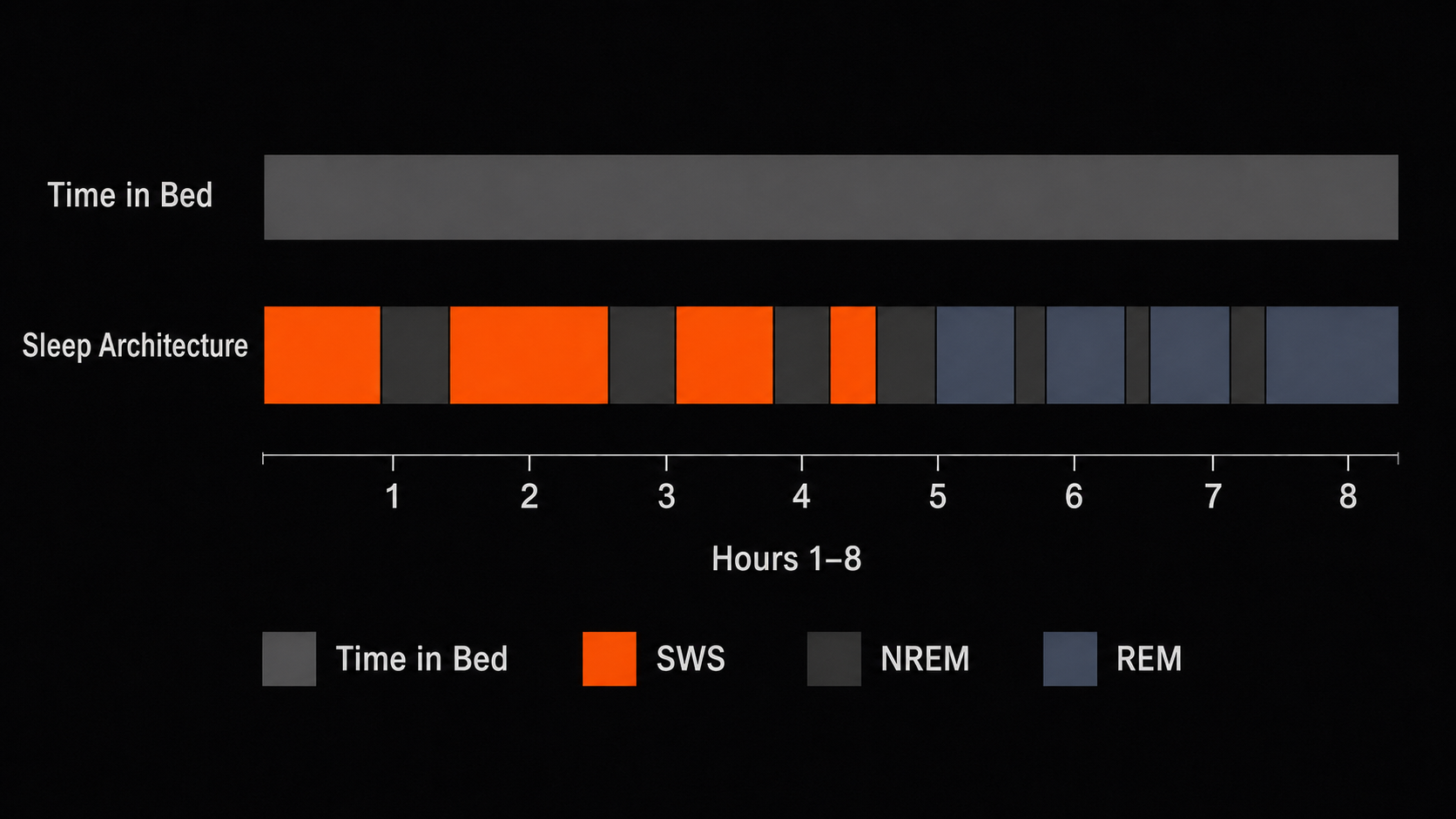
The most common error in how athletes approach sleep quality versus quantity is treating total time in bed as the performance variable. Eight hours of clock time does not guarantee eight hours of functional sleep architecture. A night with alcohol before bed, late sleep onset due to schedule pressure, or repeated brief awakenings can produce eight hours of time in bed with substantially less SWS and less REM than an uninterrupted night of equal duration. The biology responds to stage composition, not the number reported to a sleep tracking app.
The second mistake is the assumption that sleep debt accumulated during a training week can be cleared through weekend recovery. Sleep debt does restore subjective mood and some performance markers when recovery sleep is extended, but neurological effects of restriction do not resolve as quickly as perceived alertness returns. Van Dongen et al. (2003) found that subjects adapted to feeling less impaired while remaining objectively impaired at the cognitive performance level (Van Dongen et al. 2003). The feeling of being caught up and the physiological state of being caught up are not reliably synchronized.
The third mistake follows directly from the second. Athletes who chronically restrict sleep report feeling functional after several days of restriction. This is not evidence that they are recovering adequately; it is evidence that subjective adaptation has occurred. The brain adjusts its perception of sleepiness without adjusting the underlying impairment. The gap between feeling rested and being rested is real, measurable, and consistently wider than most athletes assume when comparing sleep quality versus quantity as variables they can manage independently. An athlete who has adapted to six hours may genuinely not feel the deficit. The performance data will reflect it regardless.
What it measures
Eight Hours in Bed
A measure of opportunity, not architecture. Alcohol, late sleep onset, and fragmented sleep can produce 8 hours of total sleep time with substantially less SWS and REM than an uninterrupted night. The biology responds to stage composition, not clock time.
What the biology reads
Eight Hours of Architecture
The actual distribution of NREM and REM stages across the night. SWS is front-loaded in the first 3–4 hours. REM extends in the final 2 hours. Timing, continuity, and depth of each stage govern the hormonal and cellular recovery processes.
“The brain adjusts its perception of sleepiness without adjusting the underlying impairment.”
Reading Your Own Recovery: HRV, Sleep Quality, and What Actually Matters
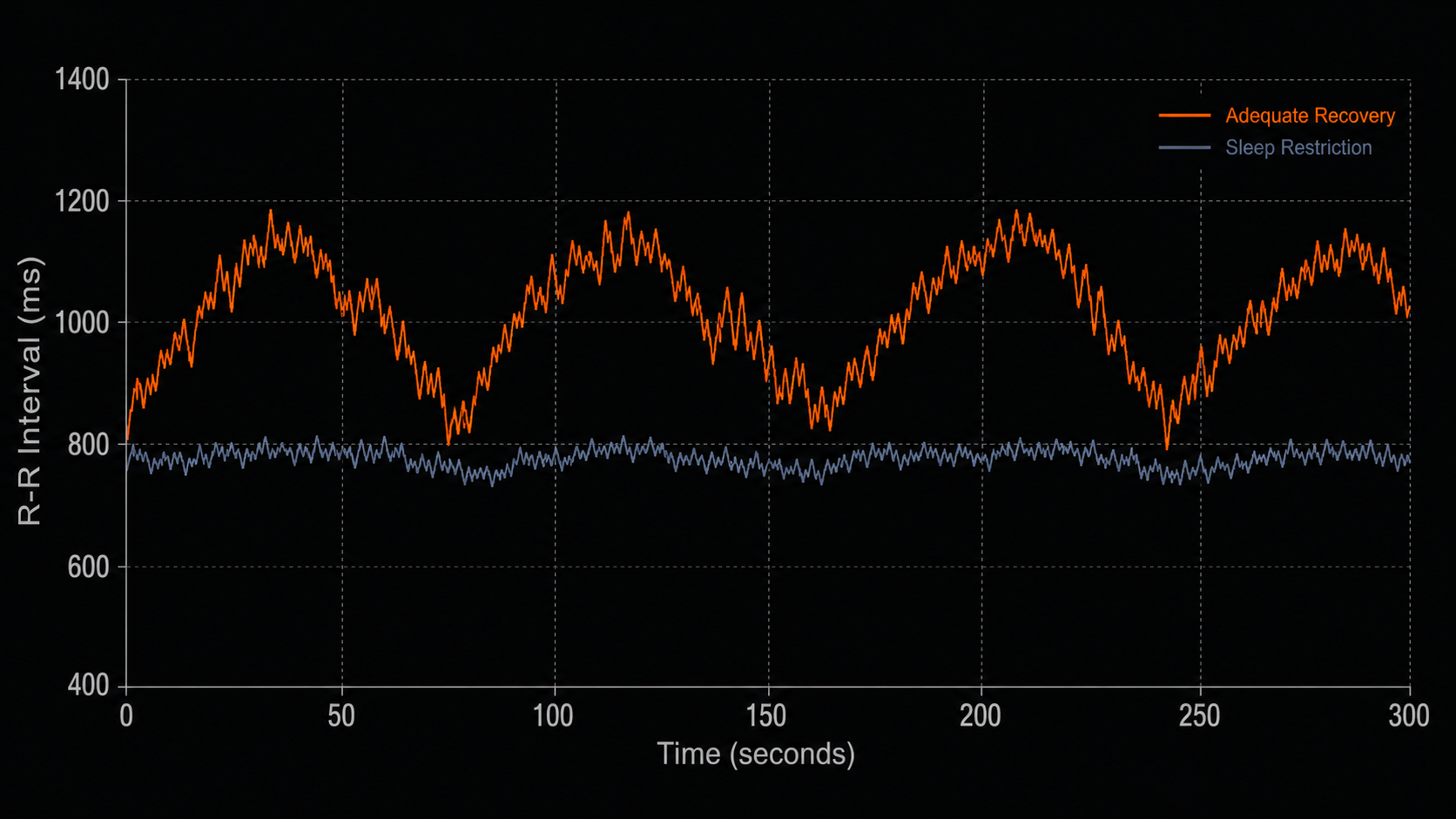
HRV and sleep quality are connected through a shared mechanism: autonomic nervous system regulation. HRV, specifically the beat-to-beat variation in resting heart rate that reflects cardiac parasympathetic activity, responds to the same regulatory systems that govern sleep architecture and recovery. A suppressed morning HRV reading after a poor night of sleep is not an artifact of stress in a general sense; it is a measurement of incomplete autonomic recovery from a night where the restoration processes did not run at full capacity.
Buchheit (2014) reviewed the evidence for near-daily resting HRV recording as a monitoring tool for fatigue and training status, finding that five-minute morning recordings reliably track changes in cardiac parasympathetic activity and can reflect shifts in recovery state across training blocks (Buchheit 2014). Hynynen et al. (2006) found that while nocturnal HRV did not distinguish overtrained athletes from controls during sleep itself, morning HRV after awakening was significantly lower in the overtrained group, with parasympathetic activity measurably suppressed in those with incomplete recovery (Hynynen et al. 2006). The distinguishing variable was post-sleep autonomic state, which is precisely what the morning HRV measurement captures.
For an athlete tracking HRV, a pattern of chronically suppressed morning readings deserves to be examined through the lens of sleep architecture before attributing it to training load or other variables. The question is whether the sleep is structured well enough for the recovery processes to run, and whether the morning readout is reflecting the product of those processes or the deficit left behind by their disruption. The practical application is to treat sleep as the variable it demonstrably is, one with a measurable readout in data the athlete is likely already collecting, rather than targeting a duration number in isolation. Going to bed earlier by forty-five minutes preserves more SWS than staying in bed later in the morning, because SWS is front-loaded and morning hours are REM-dominant. The architecture responds to timing, and the monitoring data responds to the architecture.
During Sleep
Nocturnal HRV
Heart rate variability recorded during sleep itself. Hynynen et al. (2006) found this measure did not distinguish overtrained athletes from recovered controls. Not a reliable readout of recovery completeness.
Post-Awakening
Morning HRV
Resting HRV recorded after waking, before activity. Significantly suppressed in overtrained athletes versus recovered controls. Reflects post-sleep autonomic state — whether overnight recovery processes ran at full capacity.
“The architecture responds to timing, and the monitoring data responds to the architecture.”
Frequently Asked Questions
What stage of sleep is most important for physical recovery?
Slow-wave sleep (SWS, NREM Stage 3) is the most important stage for physical recovery. During SWS, the pituitary releases the majority of nightly growth hormone in a single pulse, which drives protein synthesis and tissue repair. SWS is front-loaded in the night, so anything that shifts sleep later compresses this window directly.
How does sleep deprivation affect reaction time and cognitive performance?
Six hours of sleep per night sustained over fourteen consecutive days produces cognitive deficits equivalent to two full nights without sleep. Critically, subjective sleepiness adapts while objective performance continues to decline, so athletes typically underestimate their own impairment. Adenosine, a metabolic byproduct that drives sleep pressure, clears incompletely during short nights and carries the deficit forward.
Does poor sleep increase injury risk in athletes?
Research on adolescent athletes found that those sleeping fewer than eight hours per night were 1.7 times more likely to sustain a sports injury. The mechanism involves incomplete motor pattern consolidation during REM sleep and reduced proprioception, both of which increase movement error during training without requiring any single catastrophic failure.
Does sleep affect muscle growth and training adaptation?
Sleep deprivation directly reduces muscle protein synthesis. One night of total sleep deprivation reduced muscle protein fractional synthesis rate by 18 percent in healthy young adults, while elevating cortisol and lowering testosterone. These are the hormonal and cellular inputs that convert a training stimulus into structural adaptation, and sleep restriction reduces all of them simultaneously.
Can HRV monitoring indicate whether sleep quality was adequate?
HRV reflects cardiac parasympathetic activity, which responds to the same autonomic systems that govern sleep-based recovery. Research in overtrained athletes found that morning HRV after awakening was significantly suppressed compared to recovered controls. This makes morning resting HRV a useful readout of whether overnight recovery processes completed adequately.
Sleep Is the Variable, Not the Reward
The argument for treating sleep as a performance variable rather than a recovery suggestion does not rest on wellness principles. It rests on the biology of adaptation. The session is the input. The anabolic signaling, the protein synthesis, the motor pattern consolidation, the hormonal reset: these are the outputs, and they run during sleep or they run at a fraction of the required capacity.
The physiology of sleep athletic performance is not complicated in its logic, even when it is complex in its mechanisms. A training stimulus without the execution layer produces less adaptation than the same stimulus with it intact. Sleep is that layer. The athlete who treats sleep as a reward for a hard week, something to be earned and occasionally sacrificed, is misreading the sequence. The hard week does not produce adaptation. The sleep following the hard week does.
“The hard week does not produce adaptation. The sleep following the hard week does.”
A forty-year-old training three to four days per week in BJJ or boxing while managing a career and family does not have unlimited capacity to absorb the cost of poor decisions in any one domain. Sleep restriction is the most efficient way to reduce the return on an already significant investment. The pituitary does not release the GH pulse because the athlete earned it. It fires during slow-wave sleep or it does not fire at the required magnitude, and the session that preceded it is partially left unprocessed.
“The pituitary does not release the GH pulse because the athlete earned it. It fires during slow-wave sleep or it does not fire at the required magnitude, and the session that preceded it is partially left unprocessed.”
Sleep is not the recovery gap between training sessions. It is where the biological outcome of training is produced. Miss the window and the work is applied without the adaptation.
Growth hormone secretion, motor pattern consolidation, protein synthesis — these processes run during specific sleep stages or they run at a fraction of their capacity. Duration is the clock. Architecture is what the biology reads.
Mydos Performance
— Fatigue, Recovery and Durability Series —
Sleep and Athletic Performance Capacity
Why the session is only half the work
· By Ricardo Londono, MD/PhD ·