
The Athlete Who Trains Hard but Goes Nowhere
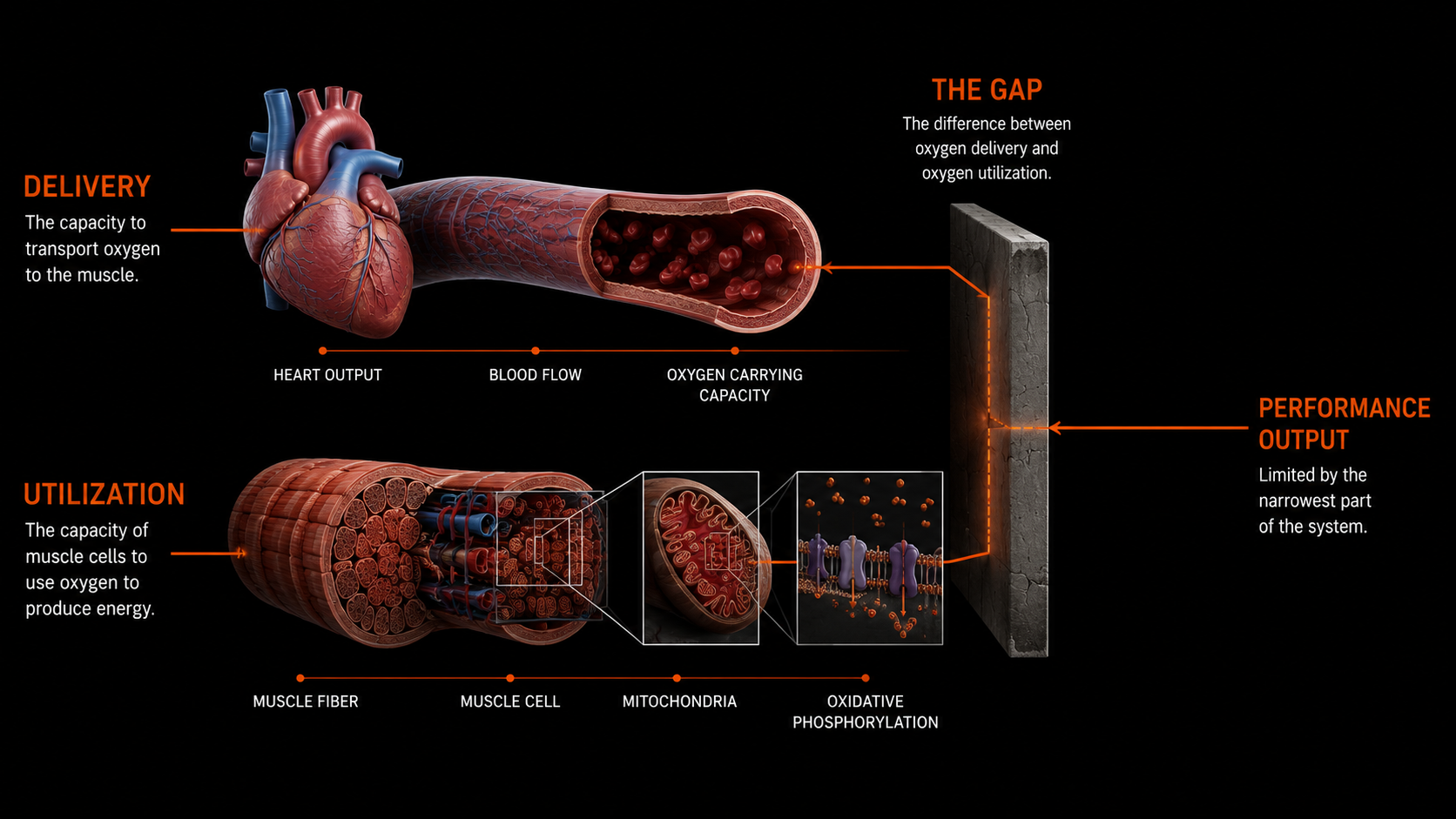
TWO SYSTEMS, ONE TERM
OXYGEN DELIVERY
The cardiovascular pathway that determines how much oxygen reaches working muscle per minute. Governed by cardiac output and capillary density.
AEROBIC CONDITIONING
The muscular and mitochondrial system that determines how efficiently working muscle uses the oxygen it receives. Governed by mitochondrial density and oxidative enzyme activity.
When an athlete’s training load is high but their performance ceiling will not move, the typical explanation is that they need more time, more sessions, or more work. The actual explanation is often different, and it centers on a distinction between oxygen delivery and aerobic conditioning that training practice almost never makes explicit.
Oxygen delivery is the cardiovascular system that determines how much oxygen reaches working muscle per minute. Aerobic conditioning is the muscular and mitochondrial system that determines what working muscle does with the oxygen once it arrives. These are two separate physiological processes, governed by separate mechanisms, that adapt to different training stimuli and fail in different ways. Most training programs treat them as though improving one automatically improves the other.
The consequence of this conflation produces a training state exercise physiologists sometimes describe as aerobic deficiency (Seiler and Kjerland 2006): consistent training, often at high volume and intensity, where the predominant stimulus stresses the cardiovascular delivery system without providing the sustained, low-intensity oxidative work the mitochondrial utilization system requires to adapt. The cardiovascular ceiling may be well developed; the aerobic floor, the oxidative capacity that determines how efficiently muscle uses oxygen across a wide range of intensities, is not. Performance plateaus, and adding more training of the same kind will not raise it, because the limiter is in the wrong system. This article explains what each system consists of, how they interact, and why identifying the correct limiter is a necessary precondition for any effective intervention.
These are two separate physiological processes, governed by separate mechanisms, that adapt to different training stimuli and fail in different ways.
Performance plateaus, and adding more training of the same kind will not raise it, because the limiter is in the wrong system.
Two Systems, One Label: What “Aerobic Conditioning” Actually Covers
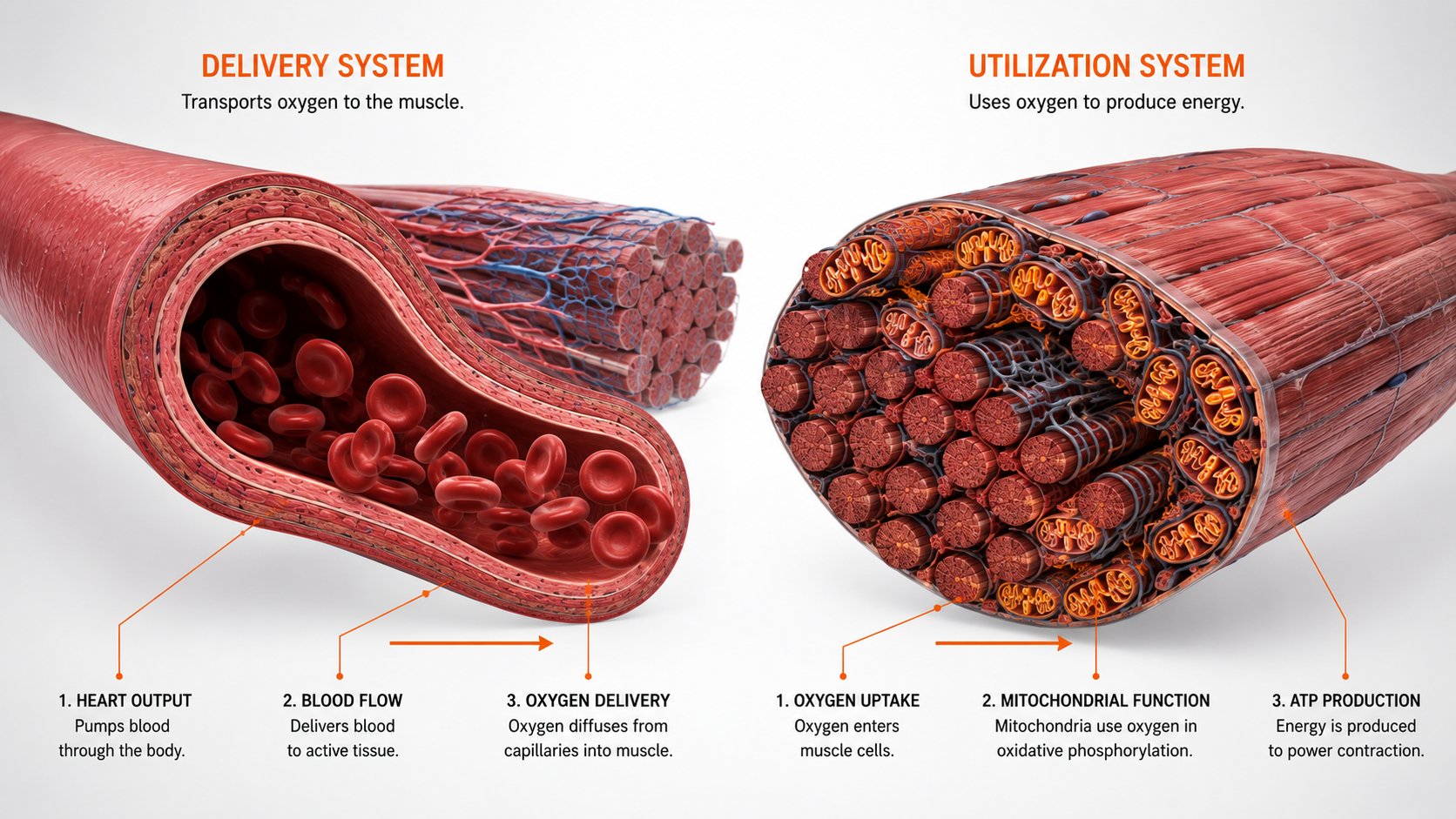
“Aerobic conditioning” is the shorthand athletes and coaches use for a broad range of physical attributes, including cardiovascular fitness, endurance capacity, and the ability to sustain effort at moderate-to-high intensities. The term is useful as a label, but it collapses two distinct physiological systems into a single category, and that compression is the source of most diagnostic errors in endurance training.
The delivery system governs how much oxygen delivery reaches working muscle per minute. It is primarily a function of cardiac output, governed by the heart and vasculature, combined with the density of the capillary network at the muscle surface. When delivery is the limiter, the bottleneck is upstream: the muscle never receives enough oxygen to work at full oxidative capacity, regardless of how well-developed the muscle itself is.
The utilization system governs what working muscle does with the oxygen it receives. It is a function of mitochondrial density, the activity of oxidative enzymes, and the efficiency of intracellular energy production at the cellular level. When utilization is the limiter, oxygen arrives in adequate supply but cannot be converted into ATP rapidly enough to meet the demand. Both systems adapt to training, but they respond to different types of training stimulus, and improving one does not reliably improve the other.
OXYGEN DELIVERY
Central System
The cardiovascular system governing oxygen transport to muscle. Training adapts cardiac output and capillary density. Fails when blood oxygen supply is the bottleneck.
AEROBIC CONDITIONING
Peripheral System
The muscular system governing oxygen use within muscle cells. Training adapts mitochondrial density and oxidative enzyme capacity. Fails when the muscle cannot process oxygen efficiently.
Defining the Aerobic Baseline
Aerobic base, the term used to describe a well-developed aerobic energy system, is not primarily a measure of training volume, though volume is often how athletes try to build it. Physiologically, aerobic base refers to the range of intensities over which the body can sustain energy production through oxidative metabolism without significant lactate accumulation. An athlete with a well-developed aerobic base can sustain effort at moderate-to-high intensities using predominantly aerobic pathways. An athlete with a weak aerobic base crosses into anaerobic energy contribution at lower intensities, accumulates lactate more rapidly, and recovers more slowly between efforts.
Building aerobic base requires developing both the delivery system and the utilization system. An athlete can accumulate high training volume and still have an underdeveloped aerobic base if that training consistently operates above the intensity at which the aerobic utilization system is the dominant energy pathway (Seiler and Kjerland 2006). Volume stresses the delivery system, but mitochondrial adaptation requires sustained oxidative work at a specific intensity range. The training stimulus for each system is not the same, and neither is the adaptation.
The Delivery Side: Cardiac Output and Oxygen Transport
~5 L/min
RESTING CARDIAC OUTPUT
(untrained adult)
35–40 L/min
MAX CARDIAC OUTPUT
(trained endurance athlete)
Cardiac output is the volume of blood the heart pumps per minute. It is the product of stroke volume, the amount of blood ejected per heartbeat, and heart rate, the number of beats per minute. At rest, cardiac output in an untrained adult is approximately five liters per minute. During maximal exercise in a trained endurance athlete, it can reach 35 to 40 liters per minute.
The trainable component of cardiac output is primarily stroke volume. Sustained endurance training produces structural changes in the heart: enlargement of the left ventricle and increased wall compliance, which allow more blood to fill and be ejected with each beat (Levine 2008). Athletes who have trained aerobically for extended periods often have resting heart rates in the low 40s or below, largely because elevated stroke volume allows the heart to meet baseline circulatory demand with fewer beats per minute.
Heart rate has a ceiling at maximal exercise that limits what cardiac output can achieve at the highest intensities. As exercise intensity increases, the time available for ventricular filling per beat shortens, which constrains the stroke volume contribution and places an upper bound on cardiac output. This is why cardiac output has a functional ceiling even in highly trained athletes, and why delivery becomes the primary limiting factor for some athletes at maximal intensities, while utilization limitations are more common at submaximal intensities (Levine 2008).
The Last Mile: Capillary Density and Muscle Oxygenation
Cardiac output determines how much oxygenated blood enters the systemic circulation, but it does not determine how efficiently that blood interfaces with working muscle. That function depends on capillary density, the number of capillaries per cross-sectional area of muscle tissue.
Oxygen diffuses from blood to muscle across the capillary wall. The shorter the distance between the capillary and the mitochondria inside the cell, and the more capillaries are in contact with the surrounding tissue, the more efficiently this transfer occurs. Two athletes with identical cardiac output can have meaningfully different oxygen availability at the mitochondrial level if their capillary density differs. Capillary density is a local, peripheral variable, not a systemic one.
Endurance training increases capillary density through angiogenesis, the formation of new capillary branches within skeletal muscle (Andersen and Henriksson 1977). This adaptation is driven primarily by sustained low-intensity aerobic work, which creates a local oxygen demand sufficient to initiate vascular growth signaling. Capillary density is the final stage of the delivery system: once oxygen crosses the capillary wall into the muscle cell, the utilization system takes over.
The Utilization Side: Mitochondrial Adaptation
Mitochondria are the cellular structures within muscle where oxygen is converted into ATP through oxidative phosphorylation. The density of mitochondria in skeletal muscle, how many are present per unit of tissue, determines the oxidative capacity available to the cell when oxygen arrives.
Endurance training increases mitochondrial density through a process called mitochondrial biogenesis. The primary molecular signal for this process is PGC-1alpha, a transcriptional coactivator that is activated during prolonged aerobic exercise and initiates the production of new mitochondria (Puigserver and Spiegelman 2003). The molecular evidence suggests that sustained aerobic work at or below the aerobic threshold produces more consistent PGC-1alpha activation than high-intensity intervals conducted well above it, though the precise intensity-duration relationship continues to be investigated.
Beyond mitochondrial density, the activity of oxidative enzymes within each mitochondrion also adapts to training. The enzymes involved in the Krebs cycle and the electron transport chain increase in concentration and activity with sustained aerobic work (Holloszy 1967). These enzymatic adaptations are partially independent of mitochondrial number: they represent increased throughput within each mitochondrion, not only an increase in mitochondrial count.
An athlete who trains primarily at high intensity may have well-developed cardiovascular capacity while the mitochondrial utilization system remains relatively underdeveloped. Oxygen delivery can be high while extraction efficiency is low. The composite performance result is a ceiling reached quickly at high intensities and poor efficiency and slow recovery at moderate ones.
Measuring Utilization: The A-vO₂ Difference
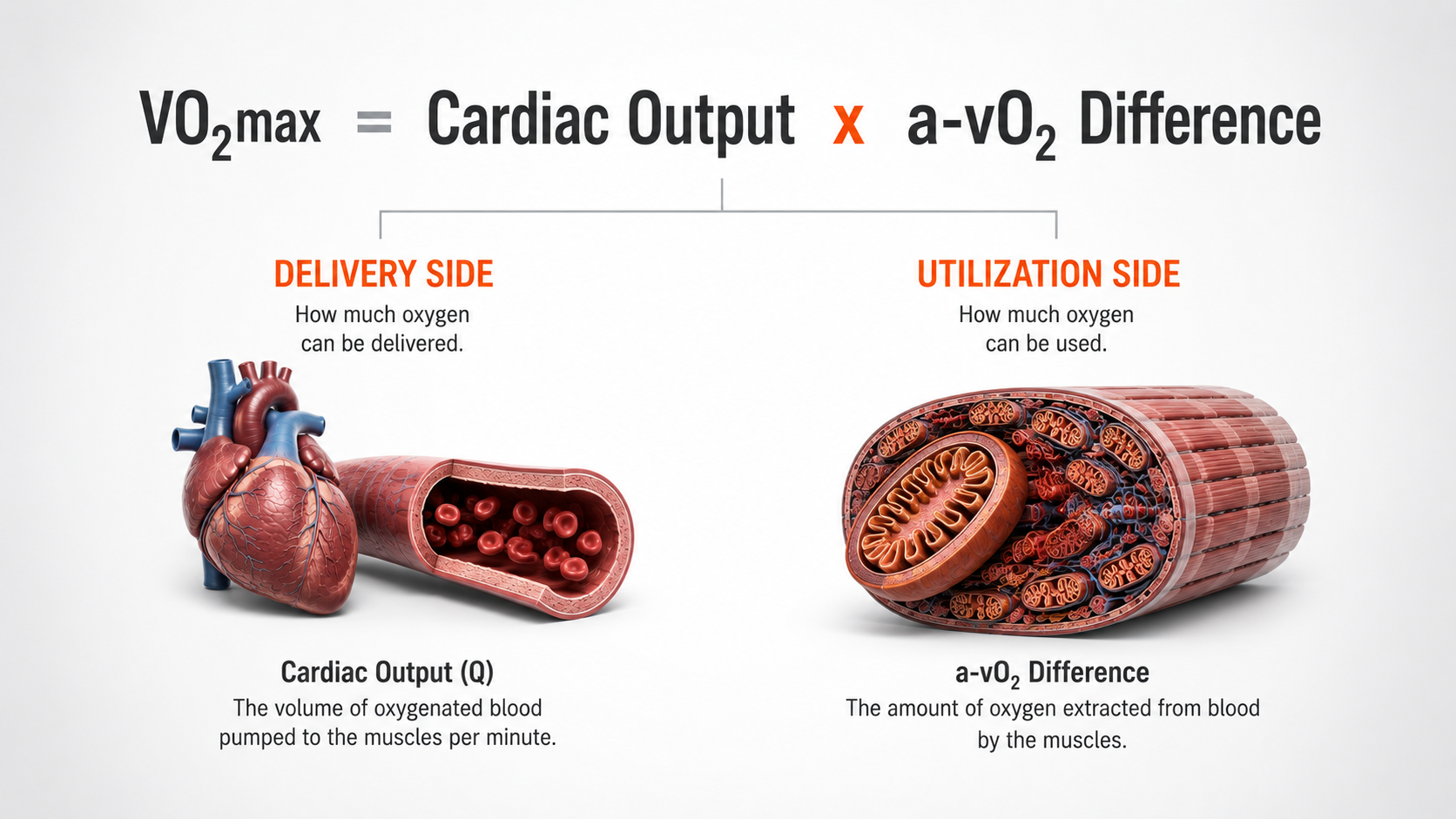
The arteriovenous oxygen difference, commonly abbreviated as a-vO₂ difference, is the measurable expression of how efficiently working muscle extracts oxygen from blood. It is calculated by subtracting the oxygen content of venous blood leaving the muscle from the oxygen content of arterial blood entering it. A larger a-vO₂ difference means the muscle is extracting more oxygen per unit of blood passing through.
The a-vO₂ difference sits at the center of the Fick equation, which defines VO₂max as the product of two variables: cardiac output and oxygen extraction. Written directly: VO₂max equals cardiac output multiplied by a-vO₂ difference (Bassett and Howley 2000). This relationship is why VO₂max conflates both systems. An athlete can achieve a high VO₂max through a large cardiac output with moderate extraction efficiency, or through high extraction efficiency with a more modest cardiac output. The composite number does not reveal which system is contributing more, and therefore provides limited diagnostic information on its own.
A low a-vO₂ difference indicates that the utilization system is not processing the oxygen available to it. Regardless of how efficiently oxygen is delivered, a utilization-limited muscle will not extract it effectively. This distinction between what arrives and what is used is the measurement-level expression of the delivery-utilization framework.
The Aerobic Threshold: Where Both Systems Are Tested
The aerobic threshold is the exercise intensity at which blood lactate concentration begins to rise measurably above resting levels. Below this threshold, aerobic energy production is sufficient to meet the demand without significant lactate accumulation. Above it, anaerobic energy contribution increases incrementally, and lactate begins to accumulate in the bloodstream.
The aerobic threshold is where delivery and utilization must work most precisely in concert. At intensities below the threshold, modest inefficiencies in either system can be compensated for by the relatively low demand on each. At intensities at or above the threshold, the gap between what the delivery system provides and what the utilization system can process determines how rapidly lactate accumulates and how long the effort can be sustained.
Consistent training above the aerobic threshold in an athlete with underdeveloped mitochondrial capacity follows a specific pattern: the cardiovascular system is stressed while the molecular signal for mitochondrial adaptation is not consistently activated. The delivery system accumulates training stimulus; the utilization system does not (Seiler and Kjerland 2006). Over weeks and months, this creates a disproportionate development between the two systems. The aerobic base does not widen. The athlete becomes more capable at high intensities and no more efficient at moderate ones.
LT1 and LT2: Reading the Boundary
LT1
First Lactate Threshold
Blood lactate begins to rise above baseline. Upper boundary of predominantly aerobic work. Primarily a utilization-side marker sensitive to mitochondrial density and oxidative enzyme activity.
LT2
Second Lactate Threshold
Lactate accumulation outpaces clearance; rapid nonlinear rise. Influenced by both delivery and utilization. Practical ceiling of sustained high-intensity performance.
Lactate threshold research distinguishes two inflection points in the blood lactate response to increasing exercise intensity, designated LT1 and LT2. Understanding what each represents clarifies which system a given test is actually measuring.
LT1, also called the aerobic threshold, is the intensity at which blood lactate first rises above baseline levels. At LT1, the aerobic utilization system is producing and clearing lactate at approximately equal rates; the increase is measurable but small, and aerobic metabolism remains dominant. LT1 is primarily a utilization-side marker: it is sensitive to mitochondrial density, oxidative enzyme activity, and the efficiency of lactate clearance within the muscle cell. An athlete with high mitochondrial capacity will have a higher LT1, meaning the aerobic utilization system can sustain a higher absolute intensity before lactate accumulation becomes significant.
LT2, also called the anaerobic threshold or maximal lactate steady state, is the intensity at which lactate accumulation begins to outpace clearance, producing the characteristic rapid nonlinear rise in blood lactate. LT2 is influenced by both delivery and utilization, but cardiovascular capacity at high intensities plays a larger role at this marker than at LT1.
The LT1–LT2 gap is a practical indicator of aerobic conditioning. A large gap indicates that the athlete can sustain a wide range of intensities within the aerobic zone, a characteristic of a well-developed oxidative system (Faude et al. 2009). A narrow gap, where LT1 and LT2 are close together, indicates that the utilization system is limited relative to cardiovascular capacity, and that even moderate-intensity effort quickly requires significant anaerobic contribution.
An athlete can achieve a high VO₂max through a large cardiac output with moderate extraction efficiency, or through high extraction efficiency with a more modest cardiac output.
The gap between LT1 and LT2 is a practical indicator of aerobic conditioning.
What the Delivery-Conditioning Split Changes About Training
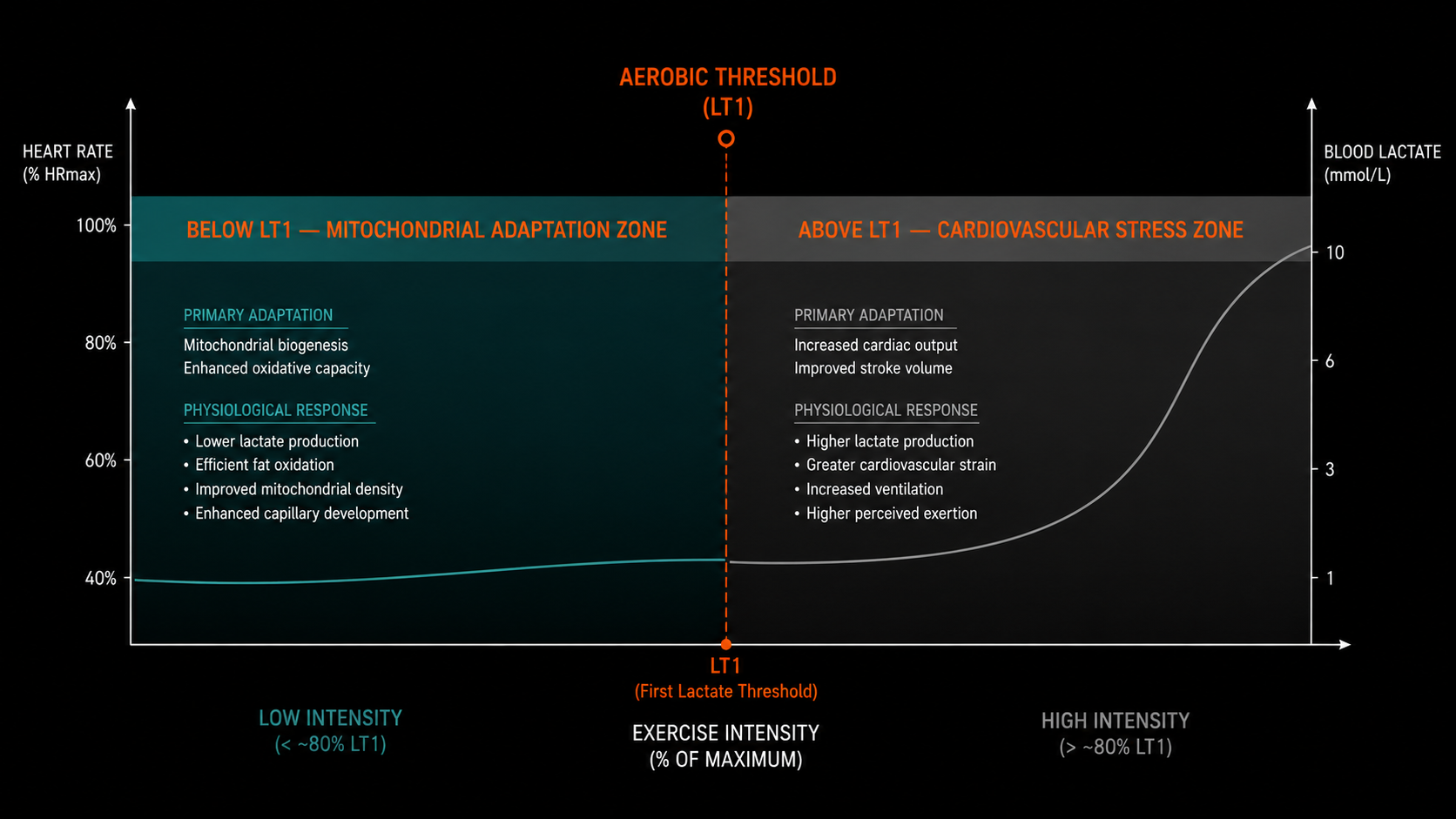
The practical consequence of the delivery-utilization distinction is that training stimulus must be matched to the system that actually needs development. A program built primarily around high-intensity work will improve cardiac output, increase tolerance for high-intensity effort, and raise LT2. It will not reliably produce the specific peripheral adaptations, including mitochondrial density, capillary density, and oxidative enzyme activity, that define aerobic conditioning in the strict physiological sense.
Low heart rate training, conducted at intensities at or below the aerobic threshold, is the primary stimulus for mitochondrial biogenesis and capillary angiogenesis. At these intensities, the aerobic utilization system is the dominant energy pathway, and the molecular signals that drive mitochondrial adaptation are most consistently engaged. Analysis of training distribution in elite endurance athletes consistently shows that the majority of effective training volume is conducted at low intensity, with a small proportion at threshold or supra-threshold intensities (Seiler and Kjerland 2006).
UTILIZATION-LIMITED
Train Below LT1
The mitochondrial system needs sustained oxidative stimulus that intensity training does not provide. Consistent low heart rate work over weeks to months drives the specific adaptation required.
DELIVERY-LIMITED
Add Threshold Work
Stroke volume and cardiac efficiency respond to higher-intensity stimulus. Threshold and cardiovascular load work is appropriate when delivery, not utilization, is the primary constraint.
The delivery system adapts across a broader range of intensities. Cardiac remodeling and stroke volume adaptation occur with both high-intensity and sustained moderate training. An athlete who trains exclusively at high intensity may develop cardiovascular capacity disproportionate to their mitochondrial capacity: a high ceiling reached quickly, without the broad oxidative base that allows sustained effort at submaximal intensities.
This asymmetry has a diagnostic implication. An athlete who improves rapidly in high-intensity efforts but plateaus in sustained moderate work, or who finds moderate intensities harder than expected given their fitness level, is likely utilization-limited rather than delivery-limited. More high-intensity training does not correct this. Sustained, consistent work below the aerobic threshold is what gives the mitochondrial system the specific stimulus it requires.
An athlete who trains exclusively at high intensity may develop cardiovascular capacity disproportionate to their mitochondrial capacity: a high ceiling reached quickly, without the broad oxidative base that allows sustained effort at submaximal intensities.
Three Ways Athletes Conflate the Systems
ERROR 1
VO₂max Misread
Two athletes with identical VO₂max can have entirely different limiting systems. The composite metric does not reveal which one is constraining performance.
ERROR 2
Volume Misapplied
Training volume above the aerobic threshold stresses the delivery system without building the mitochondrial utilization system. More is not the same as better-targeted.
ERROR 3
Wrong Intervention
An intervention that targets the delivery side produces no benefit in a utilization-limited athlete, and vice versa. Diagnosis must precede intervention.
Three specific errors follow from treating VO₂max and aerobic conditioning as a single system. The first is using VO₂max as a complete picture of aerobic fitness. Because VO₂max is the product of cardiac output and a-vO₂ difference, two athletes with identical VO₂max values can have entirely different limiting systems. One may achieve that number through high cardiac output with moderate extraction efficiency; the other through high extraction efficiency with more modest cardiovascular output. Training or supplementation that improves one variable without addressing the other may change nothing about the composite number while meaningfully shifting which system is limiting performance. An accurate assessment of aerobic limitation requires more than a single metric.
The second error is treating training volume as equivalent to aerobic base development. High training volume can accumulate without producing a strong aerobic base if that training is conducted consistently above the aerobic threshold. Volume increases the stimulus on the cardiovascular delivery system while bypassing the specific intensity range in which mitochondrial adaptation is most effectively driven. The aerobic deficiency state described in the opening section of this article is almost always the result of this error sustained over months or years of training.
The third error is applying interventions without identifying which system is the bottleneck. A training modification, supplementation protocol, or recovery strategy that improves oxygen transport on the delivery side will have no measurable effect on an athlete who is mitochondrial-limited. The mechanism of the intervention does not match the nature of the limitation. Conversely, an intervention that operates on the utilization system at the cellular level will have no impact on an athlete who is primarily cardiovascular-limited. Effective intervention requires correct diagnosis first.
Effective intervention requires correct diagnosis first.
Applying the Framework: Training, Diagnostics, and Where Cordyceps Fits
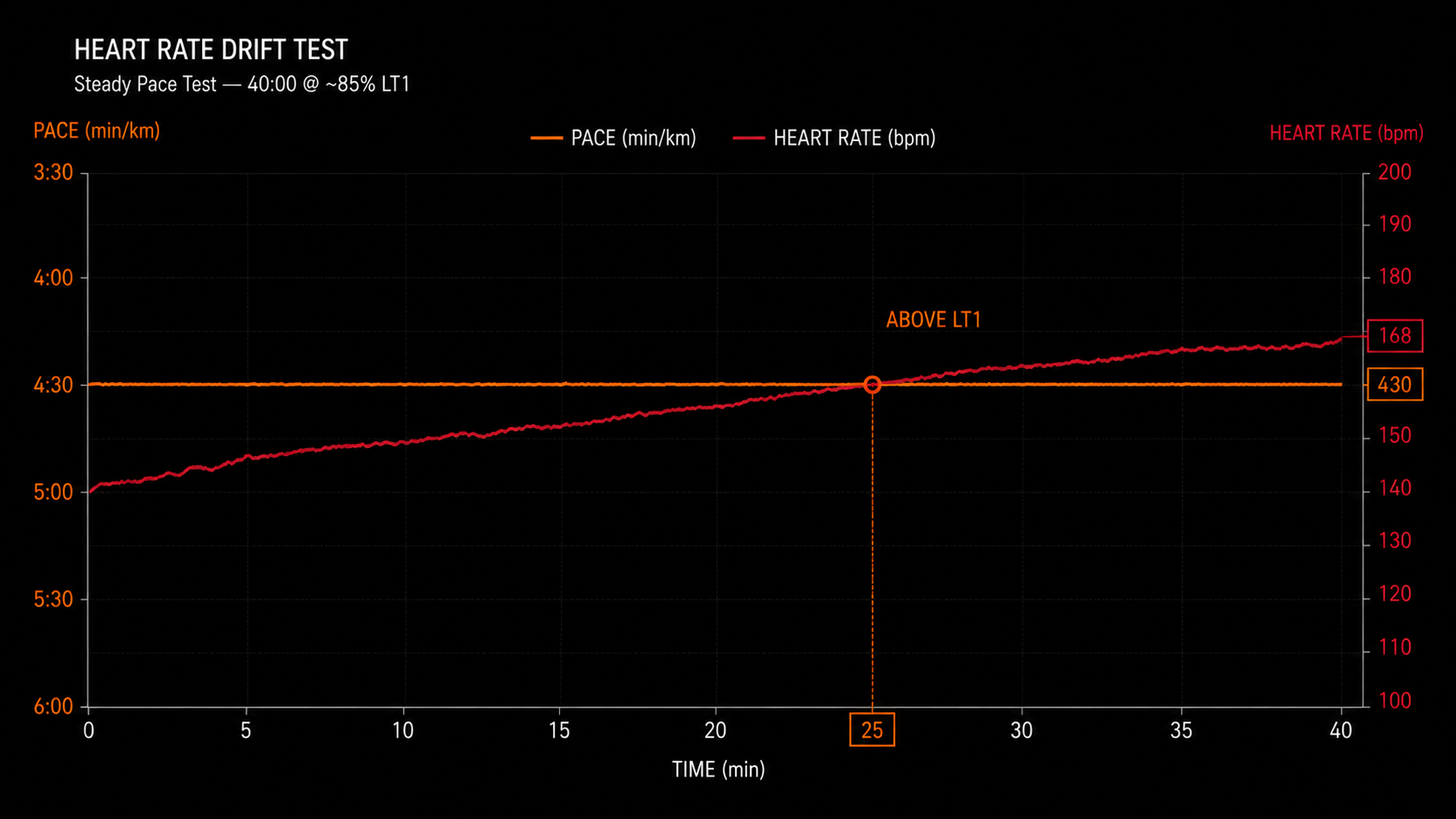
Given what this article has established about how delivery and utilization systems work separately, the practical question is how to determine which one is limiting performance.
LT1 testing is the most accessible diagnostic tool. An athlete can estimate their LT1 using a heart rate drift protocol or by monitoring pace and heart rate during sustained low-intensity efforts. An athlete whose heart rate drifts upward significantly while pace remains constant is likely working above LT1, a sign that the aerobic utilization system is under-developed relative to the intensity being sustained. Consistently training below LT1 over weeks to months provides the oxidative stimulus the mitochondrial system requires to adapt. The adaptation is not rapid, and the intensity discipline required to stay below LT1 is often lower than athletes expect.
UTILIZATION-LIMITED
Low LT1
Heart rate drifts during sustained moderate effort. Mitochondrial system underdeveloped relative to cardiovascular capacity. Prescription: consistent sustained work below LT1 over weeks to months.
DELIVERY-LIMITED
High LT1, Low Ceiling
Cardiovascular capacity is the constraint at sustained high effort. Prescription: threshold work and progressive cardiovascular load to develop stroke volume and cardiac efficiency.
For athletes whose LT1 is relatively high but who encounter a ceiling at sustained moderate-to-high effort, the limitation is more likely on the delivery-limited side. Cardiac output, stroke volume, and cardiovascular efficiency at threshold intensities become the relevant variables, and the training prescription shifts toward threshold work and progressive cardiovascular load.
Within the utilization system, some athletes include targeted supplementation as part of their approach. Cordyceps sinensis has been studied in the context of exercise performance and oxygen utilization. A double-blind, placebo-controlled trial in healthy older subjects found that 12 weeks of Cs-4 supplementation, a standardized Cordyceps sinensis extract, improved VO₂max and metabolic threshold compared to placebo (Chen et al. 2010). The proposed mechanism involves improved efficiency of ATP synthesis and oxygen utilization at the mitochondrial level, which positions it as a utilization-side tool rather than a delivery-side one. The evidence base is limited in volume, and results across studies are not uniform; this is an active area of research rather than settled science.
The relevance of this positioning is practical. An athlete who is delivery-limited, meaning their utilization system is functioning well but their cardiovascular output is the constraint, would not expect meaningful performance effects from a supplement whose mechanism operates at the mitochondrial level. Matching the mechanism of an intervention to the nature of the limitation is more useful than selecting interventions based on general performance reputation.
Matching the mechanism of an intervention to the nature of the limitation is more useful than selecting interventions based on general performance reputation.
Frequently Asked Questions
What is the difference between oxygen delivery and aerobic conditioning?
Oxygen delivery refers to the cardiovascular system that transports oxygenated blood to muscle, governed primarily by cardiac output and capillary density. Aerobic conditioning refers to the muscular system that uses that oxygen, governed by mitochondrial density and oxidative enzyme activity. The two are distinct systems with different training requirements and different failure modes.
What does the aerobic threshold mean for training?
The aerobic threshold (LT1) is the exercise intensity at which blood lactate begins to rise above resting levels. Below this point, oxidative metabolism meets energy demands without significant anaerobic contribution. Training at or below the aerobic threshold is the primary stimulus for mitochondrial adaptation, which determines how efficiently muscle uses oxygen at submaximal intensities.
What is the difference between LT1 and LT2?
LT1 (first lactate threshold) is the intensity at which blood lactate first rises measurably above baseline, marking the upper boundary of predominantly aerobic work. LT2 (second lactate threshold) is where lactate accumulation outpaces clearance and rises sharply. The gap between them reflects the breadth and development of an athlete’s aerobic utilization system.
Why doesn’t more cardio training always improve aerobic fitness?
Aerobic fitness requires development of both the oxygen delivery system and the oxygen utilization system. High-intensity training primarily stresses the delivery system (cardiac output) without reliably driving the mitochondrial adaptations that define the utilization side. If training consistently exceeds the aerobic threshold, the mitochondrial system is undertrained regardless of training volume.
How does low heart rate training improve aerobic conditioning?
Low heart rate training, conducted at or below the aerobic threshold, is the primary stimulus for mitochondrial biogenesis and capillary angiogenesis in skeletal muscle. These are peripheral adaptations that improve oxygen utilization efficiency. Training above the threshold stresses the cardiovascular system without reliably producing the same mitochondrial response.
Two Systems, One Performance
Oxygen delivery and aerobic conditioning are not redundant terms for the same capacity. They are distinct physiological systems with separate mechanisms, separate adaptive requirements, and separate failure modes. Treating them as interchangeable leads to training programs that improve one system while leaving the other to limit performance, and to interventions selected for general aerobic benefit rather than for the specific constraint that applies.
The shift this understanding produces is not a change in the tools available but in the order of operations. Identifying whether delivery or utilization is the limiting system first makes every subsequent decision, whether it involves training structure, intensity distribution, or supplementation, more accurate and less wasteful. Aerobic conditioning that addresses the wrong system is ineffective by design, not by chance. The distinction between what delivers oxygen and what the muscle does with it is where that design decision begins.
Aerobic conditioning that addresses the wrong system is ineffective by design, not by chance.
The limiting factor is the only variable that matters. Training the wrong system harder does not make the right system stronger.
Identifying whether delivery or utilization is the bottleneck changes every decision downstream: training structure, intensity distribution, supplementation. Getting the diagnosis right is the first productive step.
Mydos Performance
— What Actually Limits Performance Series —
Oxygen Delivery vs. Aerobic Conditioning: Why They’re Not the Same
The physiology behind performance ceilings that more training cannot fix
By Ricardo Londono, MD/PhD · 2026