
When High VO2max Stops Predicting Who Wins

Training for aerobic performance has, for decades, been organized around a single metric: VO2max. The logic is straightforward. More oxygen delivered to working muscle means more substrate for aerobic ATP production, which means more work can be sustained for longer. Oxygen delivery is the currency; VO2max is the bank account.
The problem with this model appears when you compare two trained athletes with nearly identical VO2max scores. Their cardiovascular systems deliver similar volumes of oxygenated blood per minute. Yet one consistently outperforms the other in time-to-exhaustion tests and competition. The difference in output cannot be explained by what is arriving at the muscle. It has to do with what the muscle does with it after it arrives.
The delivery-centric model treats the muscle as a passive recipient, as though the tissue were waiting for more oxygen and would immediately convert it to useful work. The muscle is a biochemical processing system with its own capacity limits, and in trained athletes, those limits matter more than delivery.
The Delivery Model
Oxygen in = performance out
The cardiovascular system sets the ceiling. More blood, more hemoglobin, higher VO2max — more output. This is the model most athletic training and testing is built around.
The Utilization Limit
Processing capacity determines output
In trained athletes, the muscle's ability to convert delivered oxygen into ATP is the variable that actually limits performance — and it can diverge significantly from delivery metrics.
Oxygen utilization, the process by which mitochondria within working muscle convert delivered oxygen into ATP, is the variable that most explanations of endurance performance underweight. The clearest sign of this is the VO2max plateau. Athletes who have trained consistently for several years will typically see their VO2max gains slow and eventually stall, while performance continues to improve or diverge between comparable athletes (Joyner et al. 2008). The delivery ceiling has been reached, but something else continues to develop. That something is the muscle's capacity to extract and process the oxygen it is already receiving.
"Oxygen utilization, the process by which mitochondria within working muscle convert delivered oxygen into ATP, is the variable that most explanations of endurance performance underweight."
What Actually Limits Oxygen Utilization

Central vs. Peripheral: Where the Bottleneck Is
In exercise physiology, the argument about what limits VO2max has a documented history. The traditional view places the ceiling in the cardiovascular system: the heart can only pump so much blood, hemoglobin can only carry so much oxygen, and that delivery constraint caps the rate of aerobic work. This is the central model.
The competing view places the ceiling in the periphery, meaning the skeletal muscle itself. An experiment that makes this distinction concrete involves comparing oxygen uptake during single-leg exercise versus whole-body exercise. When one leg performs work at a level that demands the same cardiac output as a whole-body effort, per-unit muscle oxygen consumption is higher than in the whole-body condition. The same heart is delivering the same total blood volume, but each unit of muscle is extracting more of the available oxygen. This finding indicates that during whole-body exercise, muscles are not extracting all the oxygen they could at that delivery rate; the extraction capacity of the peripheral tissue is the constraint, not the supply (Richardson et al. 1995).
For untrained individuals, the central model holds with reasonable accuracy. The cardiovascular system is often the first to reach its ceiling during maximal exercise. In trained athletes, the cardiovascular system has adapted substantially, and the question becomes whether the receiving tissue has adapted in proportion. Research consistently shows that it has not necessarily done so, and that peripheral utilization capacity becomes the more informative variable as training history accumulates (Bassett & Howley 2000).
Central Limit
Cardiovascular ceiling
The heart's maximum output constrains how much oxygen can be delivered. Dominant in untrained individuals. Responds to altitude, iron, and high-intensity cardiovascular training.
Peripheral Limit
Muscle ceiling
The mitochondrial density and enzyme activity of working muscle constrains how much delivered oxygen can be converted to ATP. Increasingly dominant as training history accumulates.
Understanding which limit applies to a given athlete determines which interventions are likely to produce results, and which will produce none at all.
The Path From Blood to Mitochondria
Before oxygen can contribute to ATP synthesis, it must travel from a red blood cell through a series of physical barriers to reach the interior of a mitochondrion. Each step in this pathway has a rate, and that rate depends on the structural properties of the surrounding tissue.
Oxygen exits the red blood cell in the capillary, dissolves into plasma, crosses the capillary wall, and enters the interstitial fluid surrounding the muscle fiber. Inside the fiber, myoglobin, an oxygen-binding protein found in skeletal muscle, picks up the molecule and transports it toward the mitochondria. Myoglobin maintains a diffusion gradient within the cell by keeping intracellular free oxygen concentration low, which sustains the driving force for continuous oxygen entry from the plasma.
THE OXYGEN PATHWAY
Red blood cells → Capillary wall
Oxygen dissolves into plasma and crosses the capillary endothelium into the muscle interstitial fluid.
Plasma → Muscle fiber (via myoglobin)
Myoglobin binds O2 at the cell membrane and maintains a diffusion gradient driving continuous entry into the fiber interior.
Muscle fiber → Mitochondrial inner membrane (via cytochrome c oxidase)
Oxygen reaches the terminal enzyme of the electron transport chain, Complex IV, where it is consumed and ATP synthesis proceeds.
The rate of this diffusion depends on the distance oxygen must travel and the density of the mitochondrial network available to receive it. A muscle fiber with closely spaced capillaries and high mitochondrial density offers shorter diffusion distances and more receiving surface area. A fiber with sparse capillary coverage and fewer mitochondria will have longer diffusion paths and slower effective transfer rates, even when blood supply at the capillary level is identical. The structural organization of the muscle therefore determines how efficiently a given delivery supply is converted to processable substrate.
Mitochondrial Density and the Utilization Ceiling
Mitochondrial density refers to the volume of mitochondria per unit of muscle fiber cross-section. In research, it is commonly assessed via citrate synthase activity, an enzyme whose concentration in skeletal muscle correlates reliably with mitochondrial content (Hood 2001). Higher citrate synthase activity indicates more mitochondrial mass and, consequently, greater capacity for oxidative phosphorylation.
The dose-response relationship is direct: more mitochondria means more enzymatic machinery available to process oxygen, which means more ATP can be synthesized per unit of time from a given oxygen delivery. Endurance-trained athletes can have mitochondrial volumes two to three times greater than sedentary individuals, a structural difference that does not reliably appear in VO2max scores but does appear in measures of sustained power output and oxidative capacity (Holloszy & Coyle 1984).
2–3×
MITOCHONDRIAL VOLUME
Endurance-trained athletes vs. sedentary individuals — Holloszy & Coyle 1984
This distinction matters because VO2max is a combined metric. It reflects both how much oxygen is delivered and how much the muscle can use within a given time window. Once delivery reaches a trained ceiling, further improvement in the combined score requires improvement in the utilization component. An athlete with high delivery capacity but relatively low mitochondrial density will express less of that delivery as actual work output. The oxygen arrives, but the processing machinery is insufficient to convert it at the rate demanded by the effort.
When oxygen arrives faster than it can be processed, output reaches a ceiling determined by the available enzymatic capacity. Additional oxygen in the delivery system cannot change that output, because the constraint is downstream.
Mitochondrial Efficiency: Fat Oxidation and the Aerobic Substrate
Beyond volume, mitochondrial efficiency also determines how productively the available mitochondria operate. At submaximal aerobic intensities, well-trained mitochondria preferentially rely on fat oxidation as a primary substrate. This is only feasible when mitochondrial enzyme density is sufficient to process fat at the required rate. Athletes with lower mitochondrial density reach their carbohydrate-dependent threshold earlier, at lower absolute intensities, and are more vulnerable to glycogen depletion under sustained effort.
Cytochrome c Oxidase: The Mitochondrial Rate-Limiter
Within the mitochondrion, oxygen is consumed at the final step of the electron transport chain, at the enzyme cytochrome c oxidase, also called Complex IV. This is the step at which molecular oxygen is reduced to water and the proton gradient that drives ATP synthase is maintained. Every upstream step in the chain, the transfer of electrons from NADH and FADH2 through Complexes I, II, and III, depends on Complex IV to accept electrons and complete the reaction.
"When oxygen arrives faster than it can be processed, output reaches a ceiling determined by the available enzymatic capacity."
This makes cytochrome c oxidase the terminal rate-limiting enzyme in aerobic ATP production. If Complex IV is operating below its potential, the entire electron transport chain slows. The upstream enzyme complexes cannot continue cycling until Complex IV clears the electrons it receives. The rate of oxygen consumption, and therefore the rate of ATP synthesis from aerobic metabolism, is governed in part by the activity level of this enzyme.
Cytochrome c oxidase activity is not fixed. It varies with fiber type, with training status, and with certain biochemical inputs. Highly trained endurance athletes exhibit greater Complex IV activity than untrained individuals, a difference that tracks with differences in oxidative capacity. This is why two individuals with identical arterial oxygen content can have meaningfully different rates of aerobic ATP production at the cellular level. The bottleneck is not upstream in the blood; it is at the point where oxygen is actually consumed.
The Arteriovenous Oxygen Difference: Measuring What the Muscle Takes
The arteriovenous oxygen difference, commonly written as a-vO2 difference, is the difference in oxygen content between arterial blood arriving at a tissue and venous blood leaving it. It represents the fraction of delivered oxygen that the tissue extracted during one pass through the capillary bed.
"The bottleneck is not upstream in the blood; it is at the point where oxygen is actually consumed."
A high a-vO2 difference indicates that the muscle extracted a large proportion of the delivered oxygen. A low value means that a substantial fraction passed through without being used. In the Fick equation, total oxygen uptake is the product of cardiac output and the a-vO2 difference. Two athletes with identical cardiac output can therefore have different VO2max values entirely because their muscles extract different proportions of the oxygen delivered.
Coyle and colleagues demonstrated this directly in trained cyclists: individual variation in performance at matched VO2max ranges was better explained by skeletal muscle oxidative enzyme activity and cycling economy than by cardiovascular parameters alone (Coyle 1995). The a-vO2 difference captures the muscle's contribution to the combined VO2max metric in a way that the score itself cannot. It is rarely tracked in recreational or competitive sport practice, where heart rate and pulse oximetry dominate monitoring, but it reliably separates athletes whose ceilings are cardiovascular from those whose ceilings are peripheral.
What a Utilization Deficit Looks Like in a Trained Athlete

The performance signature of a utilization ceiling is distinct from that of a cardiovascular ceiling, and the distinction has implications for how training problems are identified and addressed.
A cardiovascular-limited athlete tends to reach the ceiling through breathlessness and a heart rate that cannot accommodate the demanded workload. The limiting signal arrives from the respiratory and cardiac systems before the muscles themselves have exhausted their processing capacity. Interventions that address delivery, including altitude adaptation, iron supplementation, and high-intensity cardiovascular work, address this ceiling directly.
Cardiovascular Ceiling
Limited by delivery
Breathlessness and high heart rate arrive before the muscles exhaust their processing capacity. Altitude, iron, and high-intensity cardiovascular work address this ceiling.
Utilization Ceiling
Limited by processing capacity
Heart rate and breathing remain submaximal at output failure. The muscles cannot convert oxygen to ATP fast enough. More delivery does not help.
A utilization-limited athlete presents differently. Breathing and heart rate may be submaximal at the point of output failure. The working muscles reach their limit before the respiratory system signals its own. This reflects a biochemical situation in which ATP synthesis in the working tissue cannot keep pace with demand, despite adequate oxygen in transit. The oxygen is available, but the enzymatic machinery to process it is the constraint, and that constraint cannot be resolved by sending more oxygen.
The pattern that tends to point toward a utilization ceiling in a trained athlete is a performance plateau that does not respond to delivery-side interventions. Additional aerobic volume produces diminishing returns. Altitude exposure produces less improvement than training status would predict. VO2max tests show no movement across successive blocks while time-trial performance also stagnates. These are not diagnostic criteria, and other variables can produce similar patterns. They do, however, redirect investigation toward the peripheral machinery rather than the cardiovascular system.
"The oxygen is available, but the enzymatic machinery to process it is the constraint, and that constraint cannot be resolved by sending more oxygen."
Optimizing the Wrong Variable
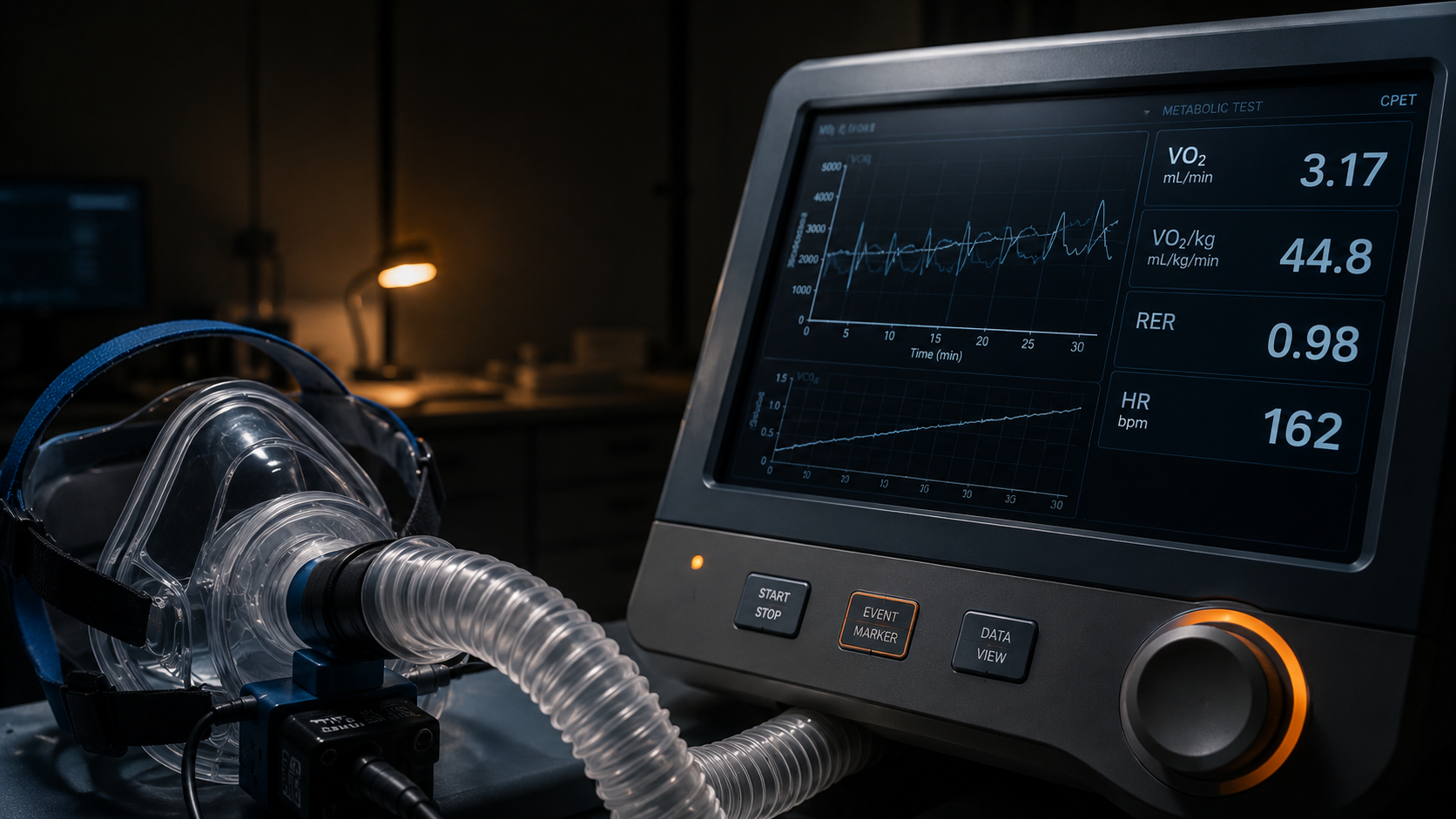
The most predictable mistake that follows from the delivery-centric model is investing in interventions that improve oxygen delivery when utilization is the actual bottleneck.
Altitude training and iron supplementation both increase hemoglobin concentration, raising the oxygen-carrying capacity of the blood. For an athlete whose ceiling is genuinely cardiovascular, these interventions have a clear mechanism of action. For an athlete limited by mitochondrial density or cytochrome c oxidase activity, neither addresses the relevant variable. More oxygen in transit does not change the rate at which the receiving tissue can process it, because the constraint is in the enzymatic machinery, not in the supply.
A second error is using VO2max as the primary comparative performance metric between trained individuals who are operating near the same delivery ceiling. Research on trained cyclists found that performance differences within a VO2max-matched group were better explained by skeletal muscle oxidative capacity markers than by VO2max values (Coyle 1995). Investing in VO2max through additional high-intensity cardiovascular training, while neglecting the peripheral machinery, amounts to refining the metric while ignoring the underlying system.
The third error is a training distribution problem. High-intensity interval training produces measurable increases in cardiovascular fitness and mitochondrial enzyme activity, and it does so efficiently in terms of time. It does not produce the same cumulative mitochondrial density gains as matched-volume work at lower intensities, particularly when total training volume is limited (Coffey & Hawley 2007). Athletes training predominantly at high intensity can arrive at a point where delivery metrics are strong and peripheral processing capacity is the limiting variable, a combination that delivery-focused monitoring will not reveal.
"More oxygen in transit does not change the rate at which the receiving tissue can process it, because the constraint is in the enzymatic machinery, not in the supply."
Training and Compounds That Target Utilization Directly

Exercise and Mitochondrial Biogenesis: What the Research Shows
Mitochondrial biogenesis is the process by which cells produce new mitochondria, increasing the mitochondrial content and therefore the oxidative capacity of the tissue. The process is regulated at the molecular level primarily by PGC-1 alpha, a transcriptional coactivator that activates the genes responsible for mitochondrial protein synthesis (Puigserver et al. 1998).
The primary trigger for PGC-1 alpha activation during exercise is a sustained drop in the cellular ATP-to-ADP ratio, signaling that energy demand is exceeding supply. This drop activates AMPK, which directly phosphorylates PGC-1 alpha and initiates transcription of mitochondrial proteins (Jäger et al. 2007). The signal scales with the duration and metabolic intensity of the effort: a prolonged, steady aerobic stimulus generates a more sustained AMPK activation than a brief, intense one.
Mitochondrial adaptations accumulate over weeks to months of consistent training. A single session produces an acute upregulation of biogenesis-related signaling, but structural changes in mitochondrial volume density require repeated stimuli over time. This is a structural adaptation with a timeline that is not compressed by training frequency alone.
THE BIOGENESIS TRIGGER
1. ATP depletion
Sustained aerobic demand drops the cellular ATP-to-ADP ratio, signaling that energy demand exceeds supply.
2. AMPK activation
AMP-activated protein kinase detects the low energy state and initiates the upstream signaling cascade.
3. PGC-1α phosphorylation
AMPK directly phosphorylates PGC-1 alpha, the master regulator of mitochondrial gene transcription, initiating protein synthesis.
4. Mitochondrial biogenesis
New mitochondrial proteins are transcribed and assembled, increasing mitochondrial volume density over weeks of repeated stimulus.
The tissue must be given the appropriate signal, consistently, for long enough that mitochondrial protein synthesis outpaces turnover.
Zone 2 Training and Mitochondrial Adaptation
Zone 2 refers to aerobic work performed at an intensity where type I muscle fibers are under sustained demand while remaining below the first lactate threshold, roughly 60 to 70 percent of maximum heart rate for most trained individuals. At this intensity, fat oxidation is near its maximum rate and the primary energy pathway is mitochondrial oxidative phosphorylation.
The specificity of Zone 2 for mitochondrial development relates to the duration and cleanliness of the metabolic signal it generates. At intensities above the lactate threshold, fast-twitch fibers are recruited in larger numbers and lactate accumulates, which shifts some of the energy demand away from the oxidative pathway and introduces a mixed metabolic environment. Zone 2 keeps the demand concentrated in type I fibers and the oxidative system, prolonging the AMPK and PGC-1 alpha signal in exactly the fibers most relevant to sustained aerobic output.
Zone 2
Prolonged, clean oxidative signal
Sustained demand on type I fibers below the lactate threshold. Fat oxidation at maximum rate. Prolonged AMPK and PGC-1α activation without glycolytic interference.
HIIT
Acute, mixed metabolic signal
Fast cardiovascular adaptation and VO2max improvement. Shorter AMPK activation window. Less cumulative mitochondrial density per volume of training time.
Volume is a meaningful parameter for this adaptation. Mitochondrial density responds to the cumulative aerobic signal over time, and the research literature points to substantial weekly Zone 2 volume as necessary for meaningful structural change in trained athletes. The athletes who underperform on this dimension are often those who have prioritized intensity over volume, producing strong cardiovascular fitness scores while leaving the peripheral processing capacity underdeveloped.
Compounds That Interact With Cytochrome c Oxidase
Beyond training, certain compounds have been studied for effects on mitochondrial function, specifically on the activity of enzymes within the electron transport chain. Cordyceps sinensis and Cordyceps militaris, two fungal species with a history in traditional medicine and more recently in sports supplementation research, have been examined in the context of oxygen metabolism and aerobic performance.
The proposed mechanism centers on effects on cytochrome c oxidase activity and the efficiency of aerobic ATP synthesis, rather than on oxygen delivery. Research in this area includes animal and in vitro studies reporting upregulation of oxidative enzyme activity, alongside a smaller number of human trials. A placebo-controlled trial found improved VO2max in older subjects supplementing with a standardized Cordyceps extract over 12 weeks (Chen et al. 2010). Effect sizes were modest, and the study population was older adults rather than trained athletes; the findings are of interest but not of the magnitude or specificity that would allow strong claims.
"This is a structural adaptation with a timeline that is not compressed by training frequency alone."
The mechanistic relevance to this article's argument is this: if cytochrome c oxidase activity is a trainable variable that also responds to certain biological inputs, then the rate-limiting step in aerobic ATP synthesis is modifiable beyond training alone. Whether supplemental cordyceps compounds produce meaningful changes in Complex IV activity in trained athletes is a question the current research does not fully answer. The mechanism is biochemically plausible; the magnitude in trained humans requires more controlled investigation than exists.
"The mechanism is biochemically plausible; the magnitude in trained humans requires more controlled investigation than exists."
Frequently Asked Questions
What is the difference between oxygen delivery and oxygen utilization?
Oxygen delivery is the rate at which oxygenated blood reaches working muscle. Oxygen utilization is the rate at which mitochondria within that muscle convert the delivered oxygen into ATP. Delivery measures what arrives; utilization measures what is processed. In trained athletes, performance depends more on the second variable than the first.
Why does VO2max plateau even as performance continues to improve?
VO2max reflects both cardiovascular delivery and the muscle's extraction efficiency. In trained athletes, the cardiovascular ceiling tends to be reached first. As peripheral adaptations, including mitochondrial density and oxidative enzyme activity, continue to develop, performance improves even when the combined VO2max score no longer changes.
How does mitochondrial density affect the ability to sustain effort?
Mitochondrial density determines how much enzymatic machinery is available to process oxygen and produce ATP per unit of time. Higher density means more capacity to convert a given oxygen supply into usable energy. When mitochondrial density is the bottleneck, increasing oxygen delivery does not improve output.
What is the arteriovenous oxygen difference and what does it measure?
The arteriovenous oxygen difference is the gap between oxygen content in arterial blood arriving at a tissue and venous blood leaving it. It quantifies how much oxygen the tissue extracted during one pass of blood through the capillaries. A higher value indicates more efficient peripheral oxygen extraction.
Does Zone 2 training specifically improve oxygen utilization?
Zone 2 training places a sustained aerobic demand on type I muscle fibers below the lactate threshold, generating the prolonged metabolic signal that drives mitochondrial biogenesis. Consistent Zone 2 volume over weeks to months increases mitochondrial density and oxidative enzyme activity, which directly improves the muscle's oxygen processing capacity.
What Oxygen Utilization Actually Tells You About Performance
The distinction between oxygen availability and oxygen utilization describes two different places in the physiology where performance can be constrained, and the appropriate intervention depends on which one is actually limiting.
In the early stages of training, both systems improve together. Cardiovascular capacity and peripheral processing capacity develop in parallel, and delivery metrics are reasonable proxies for overall aerobic fitness. As training accumulates, the two systems can diverge. The cardiovascular ceiling tends to arrive earlier and is more responsive to conventional aerobic training methods. The mitochondrial machinery, by contrast, continues responding to volume and specific training stimuli over a longer training horizon.
A trained athlete whose mitochondrial density and cytochrome c oxidase activity are limiting factors will not meaningfully improve by increasing what arrives at the muscle. Improvement comes from increasing what the muscle can do with what it already receives. Oxygen utilization is the variable that closes the gap between an athlete's delivery capacity and their actual output, and it is the variable that delivery-focused training and monitoring leave unexamined.
"Oxygen utilization is the variable that closes the gap between an athlete's delivery capacity and their actual output, and it is the variable that delivery-focused training and monitoring leave unexamined."
In a trained athlete, the limiting variable is rarely how much oxygen arrives. It is how efficiently working muscle converts that delivery into ATP — and that conversion is trainable.
Mitochondrial density and cytochrome c oxidase activity respond to consistent, specific training stimuli. The mechanisms are established. The timeline is months, not weeks. The work is Zone 2.
Mydos Performance
— What Actually Limits Performance Series —
Why Oxygen Utilization Matters More Than Oxygen Availability
Mitochondria, cytochrome c oxidase, and the hidden ceiling that separates trained from elite
By Ricardo Londono, MD/PhD · 2026